Choosing a flight school is one of the first major decisions in your pilot career. You may have already compared course fees, watched training videos and spoken to admissions counsellors. But before you pay a registration amount or training instalment, you need to understand what the school is offering beyond its brochure.
The right questions help you assess the complete cost, the training arrangements and what happens if your plans change.
These 15 questions to ask a flight school will help you approach your admission conversation with greater clarity.
Is the Flying School Approved for the Pilot Training I Need?
Start by asking for the pilot training institute’s current Directorate General of Civil Aviation (DGCA) approval details. Check the organisation’s legal name, the training it is authorised to provide and the base where you will actually fly.
Verify the information through the official DGCA portal. If you are speaking to a ground school or admissions partner, establish which Flying Training Organisation (FTO) will conduct your flight training.
You should know who is responsible for each part of your pilot course before signing an agreement.
Have My Academic and Medical Requirements Been Checked?
Ask the admissions team to review your educational documents and explain any requirements you still need to complete. A school’s admission conditions and the requirements for licence issuance are separate checks.
Discuss the appropriate DGCA medical assessment process early, particularly before committing a substantial non-refundable amount.
Individual medical eligibility must be assessed through the authorised aviation medical process. An admissions assurance cannot replace that assessment.
What Exactly Is Included in the Pilot Course Fee?
A quotation becomes useful when you can see what you are buying. Ask whether the programme covers ground school, flight training, simulator sessions and the particular ratings you intend to obtain.
Ask for an Itemised Pilot Training Breakdown
The proposal should identify:
Aircraft flying hours and simulator hours separately.
Single-engine and multi-engine training included.
Instructor charges and flight briefings.
Ground classes, learning materials and revision support.
Skill tests, examiner charges and administrative assistance.
Also clarify whether an aircraft-specific type rating is included or would be a separate stage. Avoid treating the phrase “complete pilot training” as a precise description of the package.
Which Expenses Will I Pay Separately?
Once the inclusions are clear, ask for the exclusions. Examination fees, medical appointments, accommodation, equipment, travel and licence-related expenses can sit outside the advertised training price.
Request the rates for additional flying, repeat checks and refresher training. Establish whether fuel, landing charges and applicable taxes are included and whether any rates can change during your course.
Your comparison should reflect the expected cost of completing pilot training, including foreseeable extras.
How Are the Payments Linked to My Pilot Training?
Find out how much is payable at admission, when later instalments fall due and what each payment covers.
A useful follow-up is whether payments follow calendar dates or completed training stages. If flying is delayed, will the next instalment still become due?
Ask how your account will show money paid, training delivered and the remaining balance. Before transferring funds, confirm the payment beneficiary against the agreement and obtain an official receipt.
What Happens If I Withdraw or Need to Pause Pilot Training?
Read the refund and withdrawal terms before paying a deposit. Do not assume that money described as “adjustable against pilot course fees” is also refundable.
Check the Situations Covered by the Policy.
Look for clear terms addressing:
Withdrawal before training begins.
Medical delays or an inability to continue.
Personal leave or financial difficulties.
Unused flying hours and prepaid services.
Deductions and the refund-processing timeline.
If an explanation given during counselling differs from the agreement, resolve the difference before signing.
How Many Training Aircraft Are Available at My Base?
A fleet photograph does not tell you how many aircraft will be available to your batch.
Ask how many aircraft are currently serviceable at your assigned base, which models you will train on and how many students share them. Keep aircraft planned for future delivery separate from those already operating.
Also ask how maintenance downtime affects scheduling. The practical concern is whether the school’s available capacity supports the number of students it accepts.
Who Will Train Me, and How Is My Progress Reviewed?
Your instructor will influence how you learn, respond to mistakes and develop flying judgement. Ask about instructor qualifications, availability and the number of active students assigned to each instructor.
Find out whether you will normally work with a consistent instructor and how handovers are managed when someone changes.
Regular briefings and progress reviews should help you understand what you have achieved, what needs improvement and what you must demonstrate before moving to the next stage.
How Often Are Students Actually Flying?
Ask about the flying activity of students at a similar training stage over recent months. A school-wide average can hide differences between beginners, advanced students and those waiting for specific training slots.
Discuss how flights are allocated, how cancellations are rescheduled and whether certain stages have longer waiting periods.
This gives you a more useful picture of daily training than a general promise that aircraft are available throughout the year.
How Long Have Recent Students Taken to Complete Training?
Request recent completion information for the same course and training base. Ask how many students the figures cover and how many from those batches are still training.
Clarify what the advertised duration measures. Does it end with flying completion, the final test or licence issuance?
Weather, aircraft availability, examination progress and individual learning needs can affect the schedule. A realistic estimate should explain these conditions rather than rely on the fastest student’s experience.
How Does the Flying Training Organisation Handle Safety Concerns?
Ask what happens when a student notices an aircraft defect, feels unwell or is uncomfortable proceeding with a flight.
The discussion should cover defect reporting, maintenance arrangements, emergency procedures and the person students can approach with a concern.
A training schedule should allow a flight to be postponed when necessary. Pressure to complete hours must never become a reason to overlook a safety concern.
What Ground School and Examination Support Will I Receive?
Flight training involves more than time in the aircraft. You also need a clear plan for theoretical preparation and the associated pilot examination processes.
Ask which subjects are taught, how classes fit around flying and what happens if you need additional revision. Clarify whether mock tests, repeat classes and application guidance carry separate charges.
Check examination procedures through the DGCA Pariksha portal. Understand which tasks the school assists with and which remain your responsibility.
What Will Accommodation and Daily Living Cost?
If you are relocating, ask about the actual accommodation available to students at your training base. Check the room arrangements, meals, transport, internet access and distance from the airfield.
Request monthly charges, deposits and notice periods in writing. Establish whether accommodation is compulsory and what happens to charges during leave.
Consider the cost of a longer stay as well. A training delay can extend living expenses even when the course fee remains unchanged.
Can I Visit the Pilot Training Base and Understand How Student Records Are Managed?
A base visit helps you connect the admission discussion with the place where you will train. Where possible, speak to current students at different stages about scheduling, instructor access and communication.
Also ask how you can obtain your training records, flying-hour statements and payment history.
If you later change schools, the new organisation will need to assess your previous training. Establish the record-release procedure and any outstanding-payment conditions before joining.
What Career Support Is Included After Pilot Training?
Ask the school to explain exactly what “career support” means. It might include interview preparation, technical revision or help presenting your qualifications to employers.
If placement figures are quoted, ask which batch and period they cover, how many students were included and what roles graduates obtained.
Completing a Commercial Pilot Licence (CPL) does not automatically secure airline employment. Treat training, additional qualifications and airline selection as separate stages when planning your career and budget.
Compare Flight School Fees, Payment Plans and Refund Policies Before Enrolling
Bring the answers together before making your decision. You should have a written course scope, fee breakdown, payment schedule and refund policy that you understand.
Pay particular attention to unanswered questions. An unclear charge or missing policy needs clarification, even if the rest of the pilot training programme looks suitable. Give yourself time to discuss the proposal with your family and compare equivalent pilot training packages.
Discuss Your Pilot Training Plans with Vision Flying Training Institute
Air India Express has official listings for experienced Boeing 737 and Airbus A320 co-pilots, along with A320 captains. These opportunities have specific aircraft experience requirements, so they are not suitable for every newly qualified pilot.
The first question is not simply, “Which airline is hiring?” It is, “Which recruitment route matches my qualifications?”
A fresh Commercial Pilot Licence (CPL) holder and an experienced first officer need different plans. This guide explains the recruitment pages to check, what their requirements mean, and how to prepare an application.
Airlines Hiring Pilots in India in 2026: Recruitment Status
Before applying, check which airlines are accepting applications and whether their pilot vacancies match your qualifications and flying experience.
The programme page asked candidates to await upcoming opportunities.
Published eligibility information does not establish an open application window.
IndiGo
A320 Captain (Non-Type-Rated) and A320 Captain & Above (Type-Rated). Junior First Officer eligibility is published separately.
Check IndiGo’s official Flight Operations careers page for available pilot vacancies, eligibility requirements and application instructions.
Check the required pilot licence, aircraft rating, medical validity and flying hours for your chosen role. Follow the application instructions in IndiGo’s official vacancy notice.
An accessible advertisement and an application button do not confirm that a submission can currently be completed. Reopen the official notice, follow its application route and check for updated instructions.
Pilot Jobs for Freshers: Which Opportunities Should You Check?
A fresh CPL holder should look for an advertisement that explicitly accepts their present licence, ratings, and experience.
However, the full eligibility section matters more than the job title.
Air India Group Trainee Pilot Programme
Air India Group’s Trainee Pilot Programme offers training pathways for eligible CPL holders. Licence and aircraft-rating requirements differ between pathways, so candidates should check which route matches their qualifications.
Candidates should await the next recruitment announcement before applying. Keep your documents ready and follow Air India’s official programme updates for application dates, eligibility requirements and selection instructions.
IndiGo Junior First Officer Eligibility
IndiGo’s A320 Junior First Officer requirements include a DGCA-issued Indian CPL with an A320 endorsement, a current Class 1 medical assessment and valid radio-telephony qualifications. Applicants must be between 18 and 40 years old.
Candidates also need a multi-engine endorsement with at least 25 hours of multi-engine experience, including a minimum of 15 hours on an actual aircraft and a maximum of 10 hours on a simulator. These requirements apply specifically to IndiGo’s A320 Junior First Officer category.
Pilot Vacancies for Non-Type-Rated CPL Holders
Some pilot vacancies accept CPL holders who have not yet completed an aircraft-specific type rating. However, “non-type-rated” does not mean “untrained”. You still need the pilot qualifications required for the position.
Akasa Air’s September 2026 recruitment invited non-type-rated freshers who already held a CPL. Its application deadline was 23 September 2026.Alliance Air also invited non-type-rated CPL holders for Trainee First Officer positions, with an application deadline of 15 March 2026. Both deadlines have passed, so candidates should look for a new recruitment announcement before applying.
Check the airline’s official vacancy announcements and hiring events for application instructions and any additional conditions.
Can You Apply for an Airline Pilot Job After Class 12?
Becoming an airline pilot after Class 12 starts with learning to fly and earning your commercial pilot licence. You can then look for pilot vacancies that match your qualifications and experience.
You do not need flying experience to apply for pilot training in India. Air India’s cadet pilot programme, for example, accepts beginners who meet its admission requirements. Other programmes have their own entry conditions, so check these before you apply.
Before choosing a pilot training course, establish your academic eligibility, medical requirements and complete training budget. Then compare the training route with your longer-term career goal.
Do not choose a course only because an airline has a vacancy today. A current advertisement cannot establish which positions will be available when you finish training.
How to Apply for Pilot Jobs in India
Start with the official recruitment notice and work through its conditions one by one. A useful application is not simply a collection of certificates. It should make your eligibility easy to understand and verify.
Save the exact vacancy notice
Record the airline, role title, job reference, advertisement date, closing date and application method. Save a dated copy before preparing your application.
Keep advertisements for different roles separate. A Junior First Officer notice and an experienced First Officer notice may look similar but require different qualifications.
Revisit the official page before submitting. Do not rely only on a forwarded PDF, a screenshot or a social media repost.
Compare the requirements with your current records
Create a simple eligibility checklist. Mark each condition as met, not met or needs clarification.
Air India Express A320 notice, for example, requires valid licences and related qualifications, a Class 1 medical assessment, appropriate English proficiency and an eGCA account with validated documents. These requirements belong to that advertisement; always check the role you are applying for.
Use the following table to organise your preparation.
Area to check
What to compare with the advertisement
Licence and ratings
Check whether the role requires a CPL or ATPL, a particular aircraft endorsement, an instrument rating or other current qualifications.
Flying experience
Identify whether the threshold refers to total time, time on an aircraft type, commercial airline experience, post-line-release hours or pilot-in-command time.
Medical and language records
Check the required medical assessment, English proficiency evidence and validity dates.
Radio qualifications
Confirm which radio-telephony documents the airline requests and whether they are current.
Personal eligibility
Compare nationality, age, educational qualifications and any category-specific conditions.
Supporting records
Review requirements for logbooks, proficiency checks, employment records, declarations and validated digital documents.
Use this as a preparation checklist and not as a replacement for the airline’s complete notice.
Prepare a pilot CV and document pack
Make your qualifications easy to find. Place your licence, ratings, flying-hours summary and contact details near the beginning of your CV.
Date your hours summary and make sure it agrees with your logbook. Keep total flying time, multi-engine time, aircraft-type experience and simulator time separately identifiable.
For instance, do not combine aircraft and simulator hours into a single figure that appears to meet an aircraft-experience threshold. IndiGo’s published Junior First Officer criteria specifically distinguish actual multi-engine aircraft time from simulator time.
Prepare readable copies of the documents requested by the airline. Use clear filenames, check that every page is present and avoid uploading expired records without explaining their status where the application permits it.
Submit through the specified application route
Use the application link or submission instructions in the official advertisement. Follow its requirements for document formats, email subject lines or application references.
Do not assume that creating a candidate profile, joining a talent pool or subscribing to vacancy alerts means you have applied for a particular role.
After submission, retain the acknowledgement, application number and a copy of the information supplied. A simple tracker can help you record each application’s status and follow-up requirements.
When an application link redirects to a general careers page, search for the exact job title again. Confirm the correct route through the airline’s official recruitment channel before sending documents elsewhere.
Prepare for the airline’s stated selection process
Selection stages should be checked against the individual notice. The Air India Express captain advertisement lists a psychometric assessment, a personal interview, a simulator flight proficiency test and a pre-employment medical examination.
Build your preparation around the assessment you have actually been invited to attend. Review relevant technical subjects, practise explaining your decisions clearly, and prepare to discuss your training and experience honestly.
Not for every recruitment route. Some advertisements require an existing type endorsement, while others specifically invite non-type-rated CPL holders. The Alliance Air notice is an example of the second route.
Before paying for a type rating, answer three questions:
Does the intended vacancy require the rating before application, or does it accept non-type-rated candidates?
Would the rating complete your eligibility, or would you still lack the required airline experience?
What are the written training costs, additional charges and employment conditions?
Keep these as three separate decisions: gaining a qualification, meeting the requirements of a job vacancy, and securing employment.
A rating may meet one requirement without fulfilling the others. If a requirement is unclear, ask for clarification before spending money on expensive training based solely on a job title.
Pilot Recruitment Fees: How to Avoid Misleading Claims
Be cautious about anyone promising guaranteed selection, a faster joining date or special access to an airline recruiter. Akasa Air’s official recruitment warning specifically cautions candidates about scammers charging pilot-recruitment fees and making selection promises.
However, the statement “every legitimate airline application is free” is also inaccurate.
Alliance Air’s closed February 2026 notice specified a ₹10,000 application and written-examination fee, with an exemption for SC/ST candidates. This was a condition of that particular notice and not a current instruction to pay.
Before making any payment, verify the current advertisement, amount, exemption rules, beneficiary and payment method directly through the airline’s official channel.
A payment request should match a verifiable process.
Prepare for Your Pilot Career with VFTI
Understanding pilot vacancies is useful even before you begin training. It helps you see the difference between earning a licence, developing the required skills and applying for a suitable airline position.
Vision Flying Training Institute offers DGCA ground classes, CPL training and foreign-licence conversion support. These programmes serve different starting points, so your choice should reflect the qualifications you already hold and the training you still need.
Your current stage
VFTI programme to discuss
You need preparation for the relevant pilot theory examinations.
DGCA ground classes, including the applicable subjects and preparation requirements.
You are planning to earn your first commercial pilot licence.
CPL training, with a review of eligibility, course structure and current fees.
You already hold a foreign CPL and need an Indian licensing pathway.
Foreign CPL conversion support, based on your licence, flight records and remaining requirements.
Before enrolling, request a current, itemised training proposal. Ask what is included, which costs are additional and what requirements you must complete before starting.
Speak with VFTI’s admissions team about the next step in your pilot training.
Call: +91 9319193602 or +91 9319193605 Email: enquiry@vfti.in.
A suitable pilot vacancy is one that matches your qualifications. Begin with a clear pilot training plan, maintain accurate records and apply against the airline’s actual requirements.
Your next step should move you towards the qualifications you need, without confusing course admission with guaranteed airline employment.
Frequently Asked Questions About Pilot Vacancies in India
Can I apply while my CPL is still being issued?
Only when the relevant recruitment process permits it. Air India’s published trainee programme information allows certain pending-document applications, but candidates must hold the required valid documents by the stated offer stage.
The reviewed Alliance Air notice, by contrast, excluded licences under process. Check the next live advertisement rather than assuming that one airline’s conditions apply elsewhere.
Is an ATPL required for every airline pilot vacancy?
No. The Air India Express B737 co-pilot advertisement identifies First Officer applicants with a CPL and Senior First Officer applicants with an ATPL. The captain advertisement requires an ATPL.
Licence requirements, therefore, depend on the position.
Does a cadet pilot programme guarantee employment?
Read the actual programme terms. Air India’s post-training information links an employment offer to successful completion, the group’s requirements and its stated conditions.
That wording should not be replaced with a promise of automatic employment. Before enrolling in any programme, request clear written information about training completion, selection conditions and the route to an employment offer.
What should I check about salary before accepting an offer?
Request a written breakdown of any training stipend, fixed pilot salary, flying-related payments, allowances and deductions. Ask when each payment starts and whether the amount changes during training or after release to line operations.
Also review any stated training costs, repayment conditions and service commitments. Do not use a general online salary range as a substitute for the terms of your own offer.
When will the next fresher pilot vacancy open?
Air India Group’s trainee page asks candidates to await upcoming opportunities, while the reviewed Akasa Air and Alliance Air notices have passed their application deadlines.
Follow the official recruitment pages and prepare your records in advance rather than relying on an unconfirmed hiring calendar.
Becoming a pilot is one of the most ambitious career goals for many Indian students after Class 12. The opportunity to fly aircraft, travel across countries, and build a career in the aviation industry makes pilot training an attractive choice for aspiring aviation professionals.
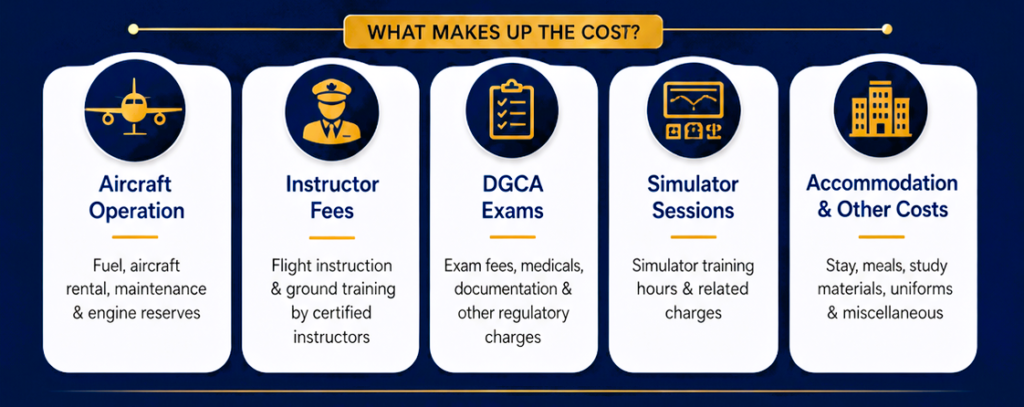
However, many students and their families find the cost of training significantly higher compared to other professional courses. A pilot training course is expensive because it involves aircraft operations, aviation fuel, experienced flight instructors, simulator sessions, aircraft maintenance, and strict safety procedures, all of which are essential for developing skilled and responsible pilots.
The major expenses include:
Expense Category
Approximate Contribution
Aircraft flying hours
Highest cost component
Aviation fuel
Major operational expense
Flight instructor fees
Required for every training flight
Aircraft maintenance
Ensures safety and airworthiness
Simulator training
Improves pilot skills in controlled environments
Ground school training
Aviation theory and DGCA exam preparation
Medical, exams and licensing fees
Regulatory requirements
Unlike classroom-based courses, pilot training requires students to learn and practise in an actual aviation environment where every flying hour has operational costs.
In India, the total cost of obtaining a DGCACommercial Pilot Licence (CPL) generally ranges between ₹55 lakh to ₹64 lakh or more, depending on the flying school, aircraft type, location, training duration, weather conditions, and individual student progress.
Understanding where this money goes helps students make better decisions when selecting a flying school.
Understanding the Real Cost of Pilot Training in India
Many students searching for pilot training fees in India come across different cost estimates online, which can make it difficult to understand the actual investment required to become a pilot.
The variation in fees happens because different flying schools include different training components in their packages. Some institutes may mention only the aircraft flying cost, while others provide a more comprehensive package that includes multiple aspects of pilot training.
Therefore, students should not choose flying schools only based on the advertised fees. It is important to understand what services and facilities are included, the quality of training provided, aircraft availability, and the overall pathway offered to become an airline-ready pilot.
A transparent understanding of the complete cost structure helps students and their families plan their aviation journey better and avoid unexpected expenses during training.
The pilot course fee is divided across several essential components, as discussed below:
Aircraft Flying Hours: The Biggest Expense in Pilot Training
The largest part of CPL training cost comes from aircraft flying hours.
According to DGCA requirements, a Commercial Pilot Licence applicant must complete the required flying experience, including approximately 200 hours of flight time along with other mandatory requirements.
Every flight hour involves multiple expenses:
Aircraft usage
Fuel consumption
Instructor time
Maintenance checks
Airport operational charges
A training aircraft itself is a highly specialised machine requiring regular inspections and maintenance.
For example, a single-engine training aircraft used by student pilots may cost thousands of rupees per flying hour because operating an aircraft involves much more than simply taking off and landing.
Aviation Fuel Makes Flight Training Expensive
Fuel is one of the highest operating costs for any aircraft.
Unlike cars, aircraft consume specialised aviation fuel such as:
Aviation Turbine Fuel (ATF) for turbine aircraft
Aviation gasoline (AVGAS) for many piston training aircraft
Fuel prices directly impact flight training costs.
A flying school must maintain enough fuel availability so students can complete their scheduled flying hours without interruption.
Aircraft Maintenance and Safety Standards
Safety is the highest priority in aviation. Every training aircraft must undergo regular maintenance and inspections through approved Maintenance, Repair, and Overhaul (MRO) facilities to ensure airworthiness and safe operations.
These maintenance requirements increase operational costs but are essential for producing skilled and safety-focused pilots.
Professional Flight Instructors
A pilot is not trained only through books. Students learn directly from experienced flight instructors who guide them through practical flying skills, including:
Aircraft handling
Take-off and landing techniques
Emergency procedures
Navigation
Decision-making
Aviation discipline
Flight instructors play a critical role in developing safe, confident, and skilled pilots. Their expertise, flying experience, and continuous guidance are an essential part of the overall pilot training investment.
Simulator Training and Advanced Learning Tools
Modern pilot training includes simulator sessions to help students practise situations that cannot always be safely created in real flights.
Simulator training helps students understand:
Aircraft systems
Emergency situations
Instrument procedures
Weather-related challenges
Cockpit operations
These sessions improve pilot confidence before handling similar situations in an actual aircraft.
Complete Breakdown of Commercial Pilot Licence (CPL) Training Expenses in India
The exact cost of CPL training varies between flying schools depending on aircraft fleet, flying hours, location, infrastructure, and services included in the training package. At reputed flying institutes, such as Vision Flying Training Institute, the overall CPL training cost generally ranges from ₹55 lakh to ₹64 lakh.
Training Component
Estimated Cost Range
Aircraft flying hours
₹40 lakh – ₹50 lakh
Ground school training
₹2 lakh – ₹5 lakh
Flight instructor charges
Included in flying training cost
Simulator training
₹1 lakh – ₹3 lakh
DGCA examination preparation, exams & licence support
₹50,000 – ₹1.5 lakh
Medical examination & documentation
₹15,000 – ₹50,000
Uniform, books & training materials
₹50,000 – ₹1 lakh
Accommodation & living expenses during training
Depends on location and duration
Total CPL Training Investment
₹55 lakh – ₹64 lakh (approx.)
Note: These figures are approximate and may vary depending on the institute, aircraft availability, and training speed.
How much does it Cost to Become an Airline Pilot in India?
Many students calculate only the cost of obtaining a Commercial Pilot Licence (CPL). However, becoming an airline-ready pilot involves additional training and expenses after CPL completion.
At one of the top flying institutes in India, such as Vision Flying Training Institute (VFTI), the CPL training investment generally ranges between ₹55 lakh and ₹64 lakh. The total cost depends on factors such as training requirements, flying hours, and associated expenses.
After completing CPL, many aspiring airline pilots also undergo aircraft type rating training, which is required to operate specific commercial aircraft such as Airbus or Boeing aircraft.
A type rating program can cost approximately ₹20 lakh to ₹25 lakh or more, including expenses such as:
Considering CPL training, type rating, accommodation, and additional career preparation expenses, the total investment to become an airline-ready pilot can approach ₹90 lakh.
Training Stage
Approximate Cost
CPL Training in India
₹55 lakh – ₹64 lakh
Type Rating Training
₹20 lakh – ₹25 lakh
Accommodation & Living Expenses
Additional cost depending on location
Estimated Total Investment
₹90 lakh approx
Is Pilot Training Cost in India Different for CPL and PPL?
Yes, the cost of pilot training differs significantly between a Private Pilot Licence (PPL) and a Commercial Pilot Licence (CPL).
The reason is that both pilot licences have different purposes and training requirements.
Private Pilot Licence (PPL)
A PPL allows individuals to fly aircraft for personal and recreational purposes. It does not allow pilots to work for airlines commercially.
PPL training generally requires fewer flying hours compared to CPL training, making it less expensive.
Commercial Pilot Licence (CPL)
A CPL is required for students who want to pursue aviation as a profession and become airline pilots.
Many Indian students consider completing pilot training abroad because some countries offer favourable weather conditions, lower operational costs, and faster flying schedules.
Popular destinations for international pilot training include:
United States
Canada
Australia
New Zealand
South Africa
Philippines
Country
Approximate CPL Training Cost
India
₹55 lakh – ₹60 lakh+
USA
₹40 lakh – ₹70 lakh+
South Africa
₹35 lakh – ₹55 lakh+
Philippines
₹30 lakh – ₹50 lakh+
Australia
₹50 lakh – ₹80 lakh+
Although some countries may appear cheaper initially, students should also consider:
DGCA licence conversion requirements
Travel and accommodation expenses
Visa costs
Local living expenses
Additional training requirements after returning to India
A lower training fee does not always mean a lower overall investment.
Which Country is the Cheapest to Learn to Become a Pilot?
The cheapest country for pilot training depends on multiple factors, including exchange rates, living expenses, aircraft availability, and training efficiency.
Countries such as the Philippines, South Africa, and some regions of the USA are often considered cost-effective destinations because they offer:
Good flying weather
Lower operating costs
Availability of training aircraft
However, Indian students must carefully evaluate whether the foreign licence conversion process aligns with DGCA requirements.
A slightly higher training cost in India may provide advantages such as:
Training according to Indian aviation regulations
Easier communication and support
Familiarity with DGCA examination requirements
No international relocation expenses
Which Country is Best for Pilot Training with Low Fees?
There is no single “best” country for pilot training. The right choice depends on budget, career goals, training quality, and future airline plans.
United States
Advantages:
Large number of flight schools
Good aviation infrastructure
Flexible training environment
Considerations:
Licence conversion requirements for India
Additional expenses for accommodation and travel
South Africa
Advantages:
Good flying conditions
Competitive training costs
Popular among international students
Considerations:
Students must ensure DGCA compliance
Philippines
Advantages:
Lower training costs
English-speaking environment
Popular among Asian students
Considerations:
Quality varies between training organisations
India
Advantages:
DGCA-aligned training
No foreign licence conversion process
Easier family support
Training within the Indian aviation ecosystem
Cheapest Pilot Training in India With Fees
Students often search for the cheapest pilot training institute in India, but selecting a flying school only based on fees can create problems later.
The actual cost depends on:
Number of flying hours required
Aircraft availability
Instructor availability
Training duration
Additional charges
Approximate CPL training fees in India:
Training Option
Estimated Cost
Basic CPL training packages
₹45 lakh – ₹55 lakh
Established flying institutes in India
₹50 lakh – ₹65 lakh
CPL + additional career preparation
₹70 lakh+
The cheapest option may not always be the most cost-effective choice, as delays can increase the overall training duration and result in additional expenses.
Hidden Costs Students Should Consider Before Starting Pilot Training
Many students focus only on CPL fees and forget additional expenses involved in becoming an airline-ready pilot.
Some additional costs may include:
DGCA Medical Examination
Before beginning professional pilot training, candidates must complete DGCA medical tests.
These include:
Class 2 Medical Examination
Class 1 Medical Examination
DGCA Examination Preparation
Students must clear DGCA theoretical examinations as part of the CPL training process. These examinations assess their knowledge of essential aviation subjects for pilot training in India.
Accommodation and Living Expenses
Students often relocate to the city where their flying school is located, which adds to the overall cost of pilot training. These expenses may include hostel or rental accommodation, food, transportation, and other daily requirements.
The total cost can vary significantly depending on the training location, lifestyle, and duration of the course.
Additional Flying Hours
Not every student completes training within the minimum required flying hours.
Additional flying may be required because of:
Weather delays
Skill improvement requirements
Aircraft availability
Training gaps
Extra flying hours increase the overall cost.
Why Does Pilot Training Cost More Than Other Professional Courses?
Pilot training is different from traditional education programs.
A student studying engineering or management mainly uses classrooms, laboratories, and digital resources.
Unlike most career courses, pilot training involves practical aviation operations and specialised resources that significantly increase the overall investment.
The comparison below highlights why pilot training involves a higher investment than traditional courses:
Traditional Course
Pilot Training
Classroom learning
Classroom and aircraft training
Books and computers
Aircraft and aviation equipment
Laboratory practice
Real flight operations
Fixed infrastructure
Aircraft maintenance and operations
Aviation training is expensive because students are learning a profession where mistakes can have serious consequences. Therefore, training standards are designed around safety and practical competence.
Is Pilot Training Worth the Investment?
Pilot training is a significant financial commitment, but aviation continues to offer rewarding career opportunities for skilled and qualified pilots. The salary of a pilotis one of the aspects that attracts many aspiring aviation professionals to this career path.
A good training institute not only helps students obtain a licence; it prepares them with the knowledge, skills, and professional standards required to succeed in the aviation industry.
How Choosing the Right Flying School Can Reduce Training Costs
The cheapest flying school is not always the most affordable option. A school with limited aircraft availability, training delays, or poor scheduling can increase the overall duration and cost of pilot training.
Students should consider the following points before selecting a flying institute:
Aircraft Availability: A sufficient number of aircraft helps students complete their flying hours on time and avoid unnecessary delays.
Experienced Instructors: Skilled instructors help students learn effectively and progress smoothly throughout their training.
Training Infrastructure: Access to proper classrooms, simulators, and maintenance facilities supports better learning and efficient training.
Transparent Fee Structure: Understanding what is included in the fees and knowing about additional expenses helps students plan their investment better.
Why Choose Vision Flying Training Institute (VFTI) for Pilot Training?
Vision Flying Training Institute focuses on providing aspiring pilots with structured aviation training designed around safety, skill development, and professional growth.
At VFTI, students receive support throughout their pilot training journey, including flight training, ground school preparation, aviation knowledge development, and guidance to help them understand the requirements of a professional pilot career.
Choosing the right institute is one of the most important decisions in a pilot’s career journey. A well-planned training approach helps students develop the confidence and skills required to enter the aviation industry.
Conclusion
Pilot training is expensive because aviation demands the highest levels of safety, technical knowledge, and practical skill.
Every flying hour, instructor session, aircraft inspection, and training requirement contributes to creating a competent professional pilot.
Aspiring pilots in India should focus not only on finding the lowest-cost training option but also on choosing a reliable flying institute that provides quality education, proper guidance, and a strong foundation for a successful aviation career.
Connect with our admission consultants today to learn more about CPL training, eligibility requirements, and the admission process.
Vision Flying Training Institute (VFTI) helps aspiring pilots take their first step towards building a successful aviation career.
Frequently Asked Questions (FAQs)
Why is pilot training so expensive in India?
Pilot training is expensive because it involves aircraft operations, fuel, maintenance, instructors, simulator training, and strict aviation safety requirements.
How much does it cost to become a pilot in India?
The cost of becoming a commercial pilot in India usually ranges from approximately ₹55 lakh to ₹60 lakh or more, depending on the flying school and training requirements.
Can I become a pilot after Class 12?
Yes. Students who have completed Class 12 with Physics and Mathematics can pursue pilot training after meeting DGCA eligibility requirements.
What is included in CPL training fees?
CPL training fees generally include flight training, ground classes, instructor charges, aircraft usage, and other training-related expenses.
Is pilot training a good career option in India?
Pilot training can be a rewarding career choice for students who are passionate about aviation, committed to learning, and willing to maintain professional standards.
How can I reduce pilot training costs?
Students can reduce costs by choosing a reputed flying school with good aircraft availability, completing training efficiently, and understanding all fees before joining.
Many Indian students choose to complete their Commercial Pilot Licence (CPL) training abroad because of better flying conditions, aircraft availability, faster training timelines, and international exposure. Countries like the USA, Australia, New Zealand, and South Africa are popular destinations for aspiring pilots. Understanding the training cost, requirements, and career opportunities can help students choose the best country for pilot training based on their goals.
However, completing a CPL from another country does not automatically allow you to fly commercially in India.
Before planning your next step in India, there is a question to answer: Do your licence, logbook and recent flying meet DGCA’s requirements?
Foreign CPL to DGCA conversion allows eligible pilots to obtain an Indian licence using their overseas qualifications and experience. You do not automatically need to repeat your entire CPL course. However, the hours you have logged, the aircraft you have flown and the dates of your tests all matter.
This guide explains what to prepare, which exams to take, how conversion flying works and how to plan the time between returning to India and receiving your Indian CPL.
What is Foreign Licence Conversion?
Foreign Licence Conversion (FLC) is the process of converting a pilot licence issued by a foreign aviation authority, such as the FAA (USA), EASA (Europe), CASA (Australia), or other ICAO-recognised authorities, into an Indian licence issued by the Directorate General of Civil Aviation (DGCA).
A foreign pilot licence is valid under the regulations of the country that issued it. However, pilots who wish to continue their aviation career in India must complete the DGCA conversion process and meet Indian licensing requirements.
Foreign Licence Conversion is required if you plan to:
Operate aircraft commercially in India
Join Indian airlines as a professional pilot
Obtain Indian aircraft ratings or endorsements
Continue building flying experience under DGCA regulations for career progression
The conversion process ensures that foreign-trained pilots meet Indian aviation standards, including DGCA examinations, medical requirements, documentation verification, and applicable flying assessments.
How Do You Convert a Foreign CPL to an Indian DGCA CPL?
Converting a foreign CPL into an Indian DGCA CPL requires meeting Indian licensing requirements, passing the applicable DGCA examinations, holding the required medical and radio qualifications, submitting verified flying experience records, completing necessary skill tests in India, and applying through the eGCA portal. DGCA reviews the application and supporting documents before issuing the Indian licence.
The main conversion framework is governed by CAR Section 7, Series G, Part I, along with the Aircraft Rules and relevant DGCA licensing circulars.
Does a foreign CPL automatically allow you to fly commercially in India?
No. A foreign licence does not automatically give you commercial flying privileges on Indian-registered aircraft. Conversion involves the issue of an Indian licence. Validation is a separate process that recognises a foreign licence subject to specified conditions.
Foreign CPL to DGCA Conversion Requirements
Check your basic eligibility before booking conversion flying.
Requirement
What you need to check
Age
You must be at least 18 when applying for the Indian CPL.
Education
You must have passed 10+2 or an equivalent examination with Physics and Mathematics from a recognised board or university.
Foreign licence
You need a valid CPL issued by an International Civil Aviation Organization (ICAO) Contracting State, with the relevant rating and currency evidence.
Medical fitness
You need valid Indian and foreign Class 1 medical assessments for the conversion application.
English proficiency
You need acceptable evidence of English Language Proficiency, at least ICAO Level 4.
Radio qualifications
Your RTR and FRTOL documents must meet the applicable Indian requirements.
DGCA’s licence conversion process requires candidates to complete eGCA registration and maintain accurate records of their required flying experience in the electronic logbook. The conversion guidelines also recognise a valid English Language Proficiency (ELP) endorsement on the foreign licence or an acceptable ELP assessment conducted through a DGCA-approved organisation in India.
Candidates with qualifications or training records issued by overseas institutions should review the applicable verification and equivalence requirements well in advance to avoid delays during the conversion process.
Which DGCA Exams Are Required for Foreign CPL Conversion?
Foreign CPL conversion requires candidates to clear the applicable DGCA theory examinations. The conversion pathway generally includes the following papers:
Paper
Subjects covered
Air Regulations
The applicable aviation rules and procedures.
CPL Composite
Air Navigation and Aviation Meteorology.
The prescribed passing standard for DGCA theory examinations is 70%. CPL theory examination passes must have been obtained within the five years immediately preceding the date of licence application.
Candidates applying under the foreign licence conversion category must hold the relevant foreign pilot licence and meet the applicable eligibility requirements.
DGCA’s eGCA conversion guidelines also recognise separate passes in Air Navigation and Aviation Meteorology as an alternative to the CPL Composite paper. Technical Specific examinations may also be required where applicable, depending on the aircraft type and licence category.
Can you complete DGCA exams before pilot training abroad?
Yes, candidates can plan and complete the required DGCA theory examinations before obtaining their foreign licence, provided they meet the applicable eligibility requirements.
However, the examination pathway for foreign licence conversion may have specific requirements related to holding a valid foreign pilot licence. Candidates should confirm the correct examination category and eligibility criteria with their ground school before registration to avoid complications later during the conversion process.
Foreign CPL to DGCA Conversion: Step-by-Step Process
Step 1: Review your records before returning to India
Request a complete review of your training records while your overseas flight school and examiner are still available to help you obtain any missing documents or clarifications.
Prepare a summary of your flying experience, including total flight hours, Pilot-in-Command (PIC) time, cross-country flights, night flying, and instrument experience. Include the dates of your recent flights, checks, and tests alongside these records.
You should also confirm the aircraft category and instrument ratings you want to include on your Indian licence. Completing this review early allows sufficient time to correct missing endorsements, resolve documentation issues, or plan any additional flying requirements before starting the DGCA conversion process.
Step 2: Set up Pariksha and eGCA Correctly
DGCA uses two separate online platforms for different stages of the licensing process.
Portal
Main purpose
Pariksha
Computer Number registration, examination applications and results.
eGCA
Licensing applications, relevant medical records and electronic logbook services.
Your DGCA Computer Number acts as your identification number for flight crew examinations. Make sure that your personal details remain consistent across Pariksha, eGCA, passport records, academic documents, and your foreign licence.
Always follow the latest portal instructions regarding document uploads, verification procedures, and application requirements to avoid unnecessary delays.
Step 3: Complete medical, examination and radio requirements
Complete all pending requirements well in advance instead of waiting until your recent flying experience or test results approach their validity limits.
Create a timeline that includes:
DGCA examination dates and results
Medical assessment validity
RTR(A) status
Intended licence application date
Any pending documentation requirements
Maintaining a clear schedule helps identify potential delays early and ensures that one pending requirement does not affect the entire conversion process.
Step 4: Arrange foreign licence verification
Confirm the verification procedure with the aviation authority that issued your foreign CPL before starting the conversion application.
DGCA may verify the authenticity, validity, and details of your foreign licence, training records, and associated documents with the issuing authority and training organisation.
A scanned copy uploaded during the application process and an official verification response from the foreign aviation authority serve different purposes. Maintain records of all verification requests, reference numbers, correspondence, and responses for future reference.
Step 5: Complete conversion flying and skill tests
Complete the required conversion flying and skill tests through a DGCA-approved Flying Training Organisation (FTO).
The applicable conversion requirements include skill tests in India on at least one aircraft type that is intended to be endorsed on the Indian licence. These may include:
A general flying test by day.
A general flying test by night.
A day cross-country test of at least 250 nautical miles, with a full-stop landing away from the departure aerodrome.
A night cross-country test of at least 120 nautical miles, returning without landing elsewhere.
An instrument-rating test where applicable.
The required tests must generally be completed within the six months before submitting the licence application.
Candidates should also ensure that supporting evidence, including instrument and navigation-related records, is properly maintained. If acceptable evidence from the foreign training organisation is unavailable, additional requirements may apply in India.
Step 6: Submit a complete eGCA application
Complete your electronic logbook entries and submit the conversion application through eGCA along with all required documents and applicable fees.
Before final submission, cross-check the following details:
Original logbook entries
Electronic logbook records
Flying summary
Flight dates
Aircraft registrations
Pilot status during flights
Total flight hours
Ratings and endorsements
Ensure that all uploaded documents are clear, complete, and include visible signatures, stamps, and endorsements wherever required.
After submission, regularly monitor the application status and respond promptly to any clarification or document requests raised by DGCA.
Once the conversion is approved, review your issued licence carefully to confirm that your personal details, aircraft ratings, and endorsements have been recorded correctly. Our visual guide to pilot licences explains the information shown on a licence.
Documents Required for Foreign CPL Conversion
Use this as a preparation checklist alongside the current eGCA requirements.
Document group
Records to organise
Identity and education
Passport, date-of-birth evidence, academic certificates and applicable verification or equivalence documents.
Foreign qualifications
CPL, relevant ratings, currency evidence and licence-verification records.
Medical and language
Indian and foreign medical assessments, plus ELP evidence.
Radio communication
Applicable RTR and FRTOL documents, including exemption decisions where relevant.
Flying experience
Authenticated logbooks, electronic entries and category-wise flying summaries.
Tests and examinations
DGCA results, flight-test reports, applicable IR records and signal-reception evidence.
Application records
Required declarations, photograph, signature and payment acknowledgement.
Ask the FTO which police-verification, security-clearance or student-licence formalities apply before local flying. Foreign nationals and OCI applicants should check their additional requirements separately.
Can You Convert Your Instrument and Multi-Engine Ratings Too?
Your CPL, instrument rating, and aircraft ratings should be reviewed separately during the conversion process. A rating issued by a foreign aviation authority does not automatically guarantee that every endorsement will transfer directly to an Indian licence.
The standard aeroplane instrument rating pathway requires specific experience requirements, including 100 hours of Pilot-in-Command (PIC) time, with at least 50 hours of cross-country flying, and 40 hours of instrument time, of which no more than 20 hours may be completed through approved instrument ground time. The required instrument experience and skill test must also be completed within the applicable validity period before submitting the licence application.
Before selecting a multi-engine conversion package, discuss the following points with the FTO:
Whether your aircraft type and existing ratings are eligible for the intended endorsement.
Which overseas flight records and documents can support the conversion application.
Which additional technical examinations, training, or skill tests are still required.
Whether suitable aircraft availability and examiner slots match your planned timeline.
This review should be completed before committing to a conversion package based on a fixed number of flying hours. A personalised assessment helps avoid unnecessary training costs and ensures that the conversion plan matches your actual DGCA requirements.
How Long Does Foreign CPL to DGCA Conversion Take?
There is no fixed end-to-end conversion timeline for every pilot. Your preparation, flying and application processing must be considered separately.
The Ministry of Civil Aviation published an indicative 30-working-day processing timeline for CPL conversion in September 2023. It also explained that processing depends on the complexity and completeness of the application. This is a dated official benchmark for the application stage, not a promise that the whole conversion will finish in 30 days.
Stage
What determines the time required?
Record review and verification
Missing documents, academic verification and the foreign authority’s response.
Medical, theory and RTR preparation
Your existing qualifications, appointment availability, examination windows and repeat attempts.
Conversion flying and tests
Any hour shortfall, aircraft familiarity, weather, aircraft serviceability and examiner availability.
DGCA application processing
Completeness of the submission, document checks and responses to queries.
What Does Foreign CPL Conversion Cost in India?
There is no single price that applies to every foreign-trained pilot. Your budget should reflect the work still required.
Cost item
What to clarify before enrolling
Ground preparation
Which subjects, refresher classes and study materials are included?
Flying
What are the aircraft rates and estimated additional hours?
Skill tests
Are examiner, aircraft, airport and repeat-test charges included?
Medical and radio requirements
Which assessments, examinations and licence fees remain payable?
DGCA application
Which government fees and documentation services are included?
Stay and travel
How will a longer stay affect accommodation and travel expenses?
For reference, the 2025 RTR rules prescribe ₹2,000 for the written examination, ₹500 for the practical examination and ₹5,000 for licence issue. These are radio-qualification charges, not the total CPL conversion cost. Exemptions and repeat attempts affect what an applicant pays.
Request an itemised quote after your logbook review. It should explain the assumptions behind the estimated hours and what happens if you need additional training.
Plan Your Foreign CPL Conversion with VFTI
At Vision Flying Training Institute (VFTI), foreign CPL conversion support is designed around each pilot’s individual requirements. The process includes reviewing training gaps, providing ground-school refreshers, assisting with documentation, arranging additional flying where required, and supporting candidates with radio examination preparation.
VFTI is a DGCA-approved Flying Training Organisation based at Amreli Airport in Gujarat. If you are completing your pilot training overseas or have already returned to India, our team can help you understand the remaining requirements and create a practical conversion plan based on your records.
Before your initial discussion, keep the following details ready:
The country and aviation authority that issued your CPL.
Your aircraft ratings and instrument rating details.
Your total flying hours, flying-hour breakdown, and most recent flight date.
The DGCA examinations you have already completed.
Your medical status, English Language Proficiency (ELP) endorsement, and radio licence status.
Contact VFTI to discuss your foreign CPL conversion requirements, expected timeline, and training fees
A successful foreign CPL to DGCA conversion begins with understanding your current qualifications, identifying the requirements that remain, and creating a structured plan before starting the application process.
A detailed review of your licence, flight records, examinations, medical status, and required skill tests can help prevent delays and unnecessary expenses.
Pilots planning to return to India after overseas training should begin preparing early, especially before important documents, medicals, or recent flying experience approach their validity limits.
Vision Flying Training Institute (VFTI) helps aspiring pilots understand their conversion requirements, prepare for pending training needs, and move confidently towards obtaining their Indian DGCA CPL.
Frequently Asked Questions
Can an FAA CPL be converted to a DGCA CPL?
Yes, an FAA CPL can be converted into a DGCA CPL if the candidate fulfils the applicable Indian licensing requirements. The conversion process involves reviewing your US flight records, verifying the aircraft and instrument ratings you want to transfer, and completing any pending DGCA examinations, documentation, or skill requirements.
Do I need another 200 hours of flying in India?
No. A pilot does not necessarily need to complete another 200 hours of flying in India for foreign CPL conversion. Eligible overseas flying experience can be considered during the conversion process.
The additional flying requirements depend on your accepted flight experience, recency of flying, aircraft ratings, documentation, and any skill tests or training requirements identified during the review.
Can I complete the entire conversion while abroad?
Many preparation steps, including document collection, examination planning, and record verification, can be completed while you are overseas.
However, certain requirements, including applicable skill tests on aircraft types intended for endorsement on the Indian licence, must be completed in India as per DGCA requirements.
Is a foreign Class 1 medical enough?
No. A foreign Class 1 medical certificate alone does not replace the medical requirements established by DGCA.
Candidates must complete the required Indian Class 1 medical assessment and ensure that the medical validity aligns with the planned licence application timeline.
Does an Indian CPL guarantee an airline job?
No. Obtaining a DGCA CPL is an important milestone, but it does not automatically guarantee airline employment.
Airline recruitment is a separate process that depends on factors such as airline selection criteria, simulator assessments, type ratings, training performance, and operational requirements.
A pilot licence usually looks like a wallet-sized, credit-card-style aviation credential that identifies the pilot and shows key licensing information such as the pilot’s name, licence or certificate number, licence category, ratings, and issuing authority. Depending on the country and licence format, it may also display a photograph, nationality, date of birth, validity details, and official security features.
The design varies by aviation authority. In India, pilot licences are issued by the Directorate General of Civil Aviation (DGCA), while in the United States, the Federal Aviation Administration (FAA) issues pilot certificates.
Traditionally, pilot licences were issued as physical cards containing the pilot’s personal details. However, aviation licensing is now moving towards digital systems, with India introducing the Electronic Personnel Licence (EPL) for flight crew.
What Does a DGCA Pilot Licence Look Like in India?
A DGCA pilot licence is an official identity and qualification document issued by the Directorate General of Civil Aviation (DGCA), India.
The physical DGCA Commercial Pilot Licence (Aeroplane) card contains important information that identifies the pilot and confirms their flying privileges.
The DGCA Commercial Pilot Licence issued in India is bilingual, featuring both Hindi and English text. Hindi is included because it is an official Indian government document, while English is used to maintain international aviation compatibility under ICAO standards.
The front side of a DGCA CPL licence generally includes:
Section
Information Displayed
Country Name
Republic of India
Issuing Authority
Directorate General of Civil Aviation
Licence Category
Commercial Pilot’s Licence (Aeroplane)
Licence Number
Unique licence identification number
Name
Name of the licence holder
Nationality
Pilot’s nationality
Date of Birth
Pilot identification information
Date of Issue
Date when licence was issued
Photograph
Identification photograph
DGCA Seal
Official authority seal
Signature
Signature of issuing authority
Understanding the Front Side of a DGCA CPL Licence
The top section of the DGCA licence displays:
Republic of India: This confirms that the licence is issued under India’s civil aviation regulatory system.
Commercial Pilot’s Licence (Aeroplane): This identifies the type of licence. A Commercial Pilot Licence (CPL) allows a qualified pilot to work professionally in aviation after completing required training, examinations, and additional airline requirements.
Licence Number: Every pilot receives a unique licence number issued by DGCA. This number helps authorities and aviation organisations verify the pilot’s credentials.
Pilot Photograph: The licence contains the pilot’s photograph for identification purposes.
Personal Details: The licence includes:
Name
Nationality
Date of Birth
Date of Issue
These details ensure that the licence belongs to the authorised pilot.
What Information Appears on the Back Side of a DGCA Pilot Licence?
The reverse side of a DGCA pilot licence contains operational information related to the pilot’s qualifications.
It includes details such as:
Field
Meaning
Ratings
Aircraft and operational qualifications held by the pilot
PIC Information
Pilot-in-command privileges
Instrument Rating
Qualification to operate aircraft under instrument flight conditions
Remarks
Additional limitations or endorsements
Language Proficiency
Aviation communication qualification
Holder Signature
Signature of licence holder
The ratings section is especially important because it shows what aircraft categories and privileges the pilot has earned.
What Does an FAA Pilot Licence Look Like?
In the United States, the FAA does not use the term “pilot licence”. Instead, it is officially called an Airman Certificate.
The FAA pilot certificate is a wallet-sized card containing information about the pilot and their flying privileges.
The FAA certificate shown above includes:
Section
Information
Country
United States of America
Authority
Department of Transportation – Federal Aviation Administration
Pilot Name
Certificate holder name
Address
Registered address
Nationality
Country of citizenship
Date of Birth
Pilot identification detail
Certificate Type
Private Pilot, Commercial Pilot, etc.
Certificate Number
Unique FAA identification number
Date of Issue
Certificate issue date
Administrator Signature
FAA authorised signature
Why Did DGCA Introduce Electronic Personnel Licence (EPL)?
The aviation industry is becoming increasingly digital, and pilot licensing is also moving away from traditional physical documents.
In September 2024, DGCA announced plans to introduce the Electronic Personnel Licence (EPL) for flight crew licences in alignment with ICAO standards.
The official launch of the EPL took place on 20 February 2025, when the Union Minister for Civil Aviation, Sh. Ram Mohan Naidu, introduced the digital pilot licence system. With this launch, India became the second country in the world to implement an ICAO-aligned electronic licensing system for aviation personnel.
The EPL system is designed to provide pilots with faster access to their licence information while allowing airlines, regulatory authorities, and other aviation organisations to verify credentials more efficiently.
What is an Electronic Personnel Licence (EPL)?
An Electronic Personnel Licence is a digital version of a traditional pilot licence.
Instead of carrying a physical card, pilots can securely access their licence through the eGCA Mobile Application.
The EPL allows:
Digital storage of pilot licence information
Faster verification
Better security against forgery
Easier access to licence details
Faster updates and renewals
Which Pilot Licences Are Covered Under DGCA EPL?
The rollout of EPL started in phases.
Initially, DGCA introduced EPL for:
Commercial Pilot Licence (CPL)
Flight Radio Telephone Operator’s Licence (FRTOL)
Later, EPL services were expanded to include additional licensing services.
The system was further expanded for Airline Transport Pilot Licence (ATPL) services in January 2026.
Physical Pilot Licence vs Electronic Pilot Licence
The transition from traditional physical pilot licences to digital licensing represents a significant advancement in aviation documentation. While physical licences served pilots for many years, the Electronic Personnel Licence (EPL) introduces a faster, more secure, and convenient way to access and verify pilot credentials. The key differences between the two systems are:
Feature
Physical Licence
Electronic Personnel Licence
Format
Plastic card
Digital licence
Storage
Carried physically
Stored digitally
Verification
Manual checking
Digital verification
Updates
Requires physical processing
Faster digital updates
Security
Card-based security features
Digital security features
Do Pilots Still Receive a Physical Licence?
With the introduction of EPL, DGCA is gradually reducing dependence on physical pilot licence cards.
However, the licensing transition happens in phases, and existing physical licences continue according to DGCA procedures.
What Does a Pilot Licence Prove?
A pilot licence is not just an identification card. It represents:
Earning a CPL licence is one of the biggest milestones in a pilot’s journey before entering professional aviation.
Is a Pilot Licence Similar to a Driving Licence?
A pilot licence and a driving licence serve a similar basic purpose: both are official documents that confirm a person has met the required standards to operate a vehicle. A driving licence allows a person to operate a road vehicle, while a pilot licence authorises a person to fly an aircraft under specific conditions.
However, a pilot licence is far more detailed and specialised than a driving licence because flying an aircraft requires advanced technical knowledge, extensive pilot training, medical fitness, and continuous skill evaluation.
While a driving licence mainly confirms that a person has passed a driving test and meets basic road safety requirements, a pilot licence contains detailed information about the pilot’s aviation qualifications and flying privileges.
Conclusion
Understanding a pilot licence is the first step towards understanding the aviation career pathway.
At Vision Flying Training Institute (VFTI), aspiring pilots receive structured training designed to help them meet DGCA requirements and develop the knowledge and skills required for professional flying.
From ground classes to flight training, VFTI supports students throughout their journey towards earning their pilot licence and building a successful aviation career.
Start your journey towards becoming a professional pilot with VFTI today.
Frequently Asked Questions About Pilot Licences
What does a pilot licence look like?
A pilot licence looks like an official aviation identification document containing the pilot’s name, photograph, licence number, ratings, issuing authority, and flying privileges.
Is CPL the same as a pilot licence?
Yes. A CPL (Commercial Pilot Licence) is one type of pilot licence that allows qualified pilots to work in commercial aviation after meeting required conditions.
Which licence is required to become an airline pilot in India?
Aspiring airline pilots in India generally complete CPL training and later meet airline requirements before joining commercial operations.
Is an FAA pilot certificate valid in India?
FAA certificates are not automatically valid for commercial flying in India. Pilots must complete the DGCA conversion process to obtain Indian licensing privileges.
How long does it take to get a pilot licence in India?
The duration depends on factors such as training availability, weather conditions, aircraft availability, examinations, and student progress. CPL training generally takes around 18–24 months for many students.
The idea of flying an aircraft, travelling across the world, and building a respected aviation career motivates many young aspirants to explore pilot training courses in India.
However, one of the first decisions students face is understanding the difference between a Private Pilot Licence (PPL) and a Commercial Pilot Licence (CPL).
Both licences allow a person to fly an aircraft, but they are designed for completely different purposes.
A Private Pilot Licence (PPL) is meant for individuals who want to fly aircraft for personal use and recreational purposes. On the other hand, a Commercial Pilot Licence (CPL) is the required professional licence for students who want to become airline pilots and build a career through aviation.
Choosing the wrong licence pathway can lead to unnecessary expenses, additional training time, and confusion about your aviation goals.
This guide explains PPL vs CPL, including their differences, eligibility requirements, DGCA regulations, training process, cost, career opportunities, and which licence is the right choice for aspiring pilots.
What is a Pilot Licence?
Before comparing PPL and CPL, it is important to understand what it is.
A pilot licence is an official certification issued by an aviation authority that allows an individual to operate an aircraft after completing the required training, examinations, and flight experience.
In India, the DirectorateGeneralofCivilAviation(DGCA) issues pilot licences. The type of licence determines what kind of flying a pilot can perform and whether they can earn money by operating aircraft.
The two commonly discussed licences for aspiring pilots are:
Private Pilot Licence (PPL)
Commercial Pilot Licence (CPL)
While a PPL allows individuals to fly privately, a CPL is designed for those who want to pursue aviation as a career.
What is a Private Pilot Licence (PPL)?
A Private Pilot Licence (PPL) is a licence that allows a person to fly an aircraft for personal and non-commercial purposes.
A PPL holder can operate aircraft for recreational flying, personal travel, or aviation experience. However, they cannot work as a paid professional pilot or earn money by flying passengers.
Many aviation enthusiasts choose PPL training because they have a passion for flying, want to experience aircraft operations, or wish to pursue flying as a personal interest.
However, a PPL is not designed for students who want to become airline pilots.
Purpose of a Private Pilot Licence
The main purpose of a PPL is to develop safe and competent private pilots.
A PPL holder can use the licence for:
Personal flying
Recreational aviation
Aircraft ownership operations
Building initial flying experience
Aviation experience before advanced training
A PPL allows individuals to enjoy aviation but does not provide a direct professional career pathway.
PPL Eligibility Requirements in India
Candidates interested in obtaining a PPL in India must meet certain eligibility requirements set by DGCA.
Requirement
Details
Minimum Age
17 years
Educational Qualification
Minimum 10th standard or equivalent
Medical Requirement
DGCA Class 2 Medical Certificate
Aviation Authority
Directorate General of Civil Aviation (DGCA)
Training Requirement
Ground training and flight training
Students should complete their DGCA-approved medical tests before beginning training to ensure they meet aviation health standards.
PPL Training Requirements
PPL training includes both theoretical knowledge and practical flying experience.
Students learn essential aviation concepts such as:
Aircraft handling skills
Aviation regulations
Navigation basics
Meteorology
Flight planning
Aircraft technical knowledge
Safety procedures
The minimum flying requirement for PPL under DGCA regulations is generally 40 hours of flight time, including required solo and dual flying hours.
What is a Commercial Pilot Licence (CPL)?
A Commercial Pilot Licence (CPL) is a professional pilot licence that allows pilots to fly aircraft commercially and receive payment for their flying services.
Becoming an airline pilot in India requires completing Commercial Pilot Licence (CPL) training, which prepares candidates for professional flying careers with airlines and aviation operators.
Unlike PPL, CPL training focuses on developing professional-level flying skills required for commercial operations.
Purpose of a Commercial Pilot Licence
The main purpose of CPL training is to prepare pilots for professional aviation careers.
A CPL helps pilots develop:
Advanced aircraft handling skills
Professional cockpit discipline
Decision-making abilities
Instrument flying skills
Commercial flight knowledge
Aviation safety awareness
Airlines expect pilots to have strong technical knowledge, practical flying ability, and professional behaviour. CPL training builds the foundation for these requirements.
Students who have not studied Physics and Mathematics in Class 12 may need to complete these subjects through recognised options before starting CPL training.
CPL Training Requirements in India
CPL training is more advanced compared to PPL because it prepares students for professional aviation operations.
The training includes:
Ground School Training for CPL
Students study:
Air Navigation
Air Regulations
Aviation Meteorology
Technical General
Technical Specific
Radio Telephony procedures
Flight Training for CPL
Students complete practical training involving:
Solo flying
Cross-country flying
Instrument flying
Night flying
Advanced aircraft handling
Flight planning
Professional operating procedures
Candidates applying for a CPL in India generally require 200 hours of total flight experience as per DGCA requirements.
PPL vs CPL: Complete Comparison Table
Factor
Private Pilot Licence (PPL)
Commercial Pilot Licence (CPL)
Full Form
Private Pilot Licence
Commercial Pilot Licence
Main Purpose
Personal flying
Professional flying career
Career Opportunity
Limited
Extensive
Commercial Flying
Not permitted
Permitted
Airline Pilot Career
Not possible
Required pathway
Issuing Authority
DGCA India
DGCA India
Minimum Age
17 years
18 years
Education Requirement
10th standard
10+2 with Physics and Mathematics
Medical Requirement
Class 2 Medical
Class 1 Medical
Minimum Flight Experience
Around 40 hours
Around 200 hours
Training Level
Basic flying skills
Advanced professional training
Cost
Lower
Higher
Career Scope
Personal aviation
Airlines, charter, corporate aviation
Difference Between PPL and CPL Training
Although both Private Pilot Licence (PPL) and Commercial Pilot Licence (CPL) training teach students how to operate an aircraft safely, the purpose, depth of training, and expected outcomes are significantly different.
PPL training focuses on developing the fundamental skills required for private and recreational flying, while CPL training is designed to prepare pilots for the professional standards required in commercial aviation.
The difference is not only in the number of flying hours but also in the level of responsibility, decision-making ability, and operational knowledge expected from the pilot.
Training Aspect
PPL Training
CPL Training
Main Objective
Develop private flying skills
Prepare pilots for professional aviation
Training Level
Basic aviation training
Advanced professional training
Flying Focus
Personal aircraft operations
Commercial aircraft operations
Decision-Making
Basic flight decisions
Complex operational decisions
Navigation Training
Basic navigation
Advanced cross-country navigation
Instrument Training
Limited
Extensive instrument training
Career Preparation
Not designed for employment
Designed for aviation careers
PPL Training: Building Fundamental Flying Skills
PPL training introduces students to the basic principles of aviation and helps them develop the confidence required to operate an aircraft safely.
The training focuses on understanding aircraft controls, basic flight techniques, and safe flying practices under normal operating conditions.
Key Areas Covered During PPL Training:
Aircraft Handling Skills: Students learn basic aircraft controls, take-offs, landings, climbs, descents, and flight manoeuvres.
Flight Procedures: Training covers standard operating procedures, pre-flight checks, and basic aircraft operations.
Aviation Communication: Students learn radio communication procedures and interaction with air traffic control (ATC).
Navigation Skills: Training introduces basic flight planning, map reading, and navigation techniques.
Aviation Safety: Students understand safety procedures, emergency handling basics, and responsible aircraft operation.
The primary goal of PPL training is to develop safe and confident private pilots who can operate aircraft for personal flying purposes.
CPL Training: Developing Professional Pilot Skills
CPL training goes beyond basic aircraft handling and focuses on developing the technical knowledge, decision-making skills, and professional discipline required for commercial aviation.
The training prepares pilots to operate aircraft in more complex environments while following strict aviation regulations and professional standards.
Key Areas Covered During CPL Training:
Advanced Flight Operations: Students develop advanced flying skills required for professional aircraft operations.
Instrument Flying: Training includes flying with instruments and understanding procedures used in different weather and operational conditions.
Cross-Country Flying: Pilots gain experience in planning and conducting longer flights while managing navigation, fuel, and operational factors.
Commercial Aviation Procedures: Students learn professional operating standards followed in commercial aviation.
Cockpit Resource Management: Training develops teamwork, communication, and decision-making skills required in professional cockpit environments.
Emergency Management: Pilots learn how to handle complex situations while maintaining safety and following aviation procedures.
The objective of CPL training is to transform student pilots into aviation professionals who are prepared to meet the expectations of airlines and commercial operators.
CPL training costs more because it requires significantly more flying hours, advanced training, and professional preparation.
PPL vs CPL: Difference in Career Opportunities
One of the biggest differences between a Private Pilot Licence (PPL) and a Commercial Pilot Licence (CPL) is the career scope they provide.
A PPL is mainly designed for personal aviation, while a CPL is designed for individuals who want to build a professional career in the aviation industry.
Career Opportunities After PPL
A PPL provides the opportunity to enjoy flying but does not allow a pilot to work commercially.
PPL holders can:
Fly aircraft for personal purposes
Participate in recreational aviation
Build initial aviation experience
Continue training towards higher licences
However, a PPL alone does not permit its holder to work as an airline pilot or operate commercial flights.
Career Opportunities After CPL
A CPL opens the pathway towards professional aviation careers.
After completing CPL training in India and fulfilling additional airline requirements, pilots can pursue careers as:
Airline First Officer: Most commercial pilots begin their airline career as First Officers. They work alongside Captains and gain operational experience.
Charter Pilot: CPL holders can fly private charter aircraft for individuals, companies, and aviation operators.
Corporate Pilot: Corporate aviation offers opportunities to fly business jets and private aircraft for organisations.
Flight Instructor: Pilots can become flight instructors after obtaining the required instructor qualifications and experience.
Cargo Pilot: Commercial aviation also provides opportunities in cargo and freight operations.
PPL vs CPL: Which Licence is Required to Become an Airline Pilot?
When your goal is to become an airline pilot, CPL is the required licence pathway.
A PPL alone does not allow you to apply for airline pilot positions because airlines require pilots to hold professional qualifications and meet regulatory requirements.
The typical pathway to become an airline pilot in India is:
Class 12 with Physics & Mathematics
↓
DGCA Class 1 Medical Examination
↓
DGCA Ground Examinations
↓
CPL Flight Training
↓
Commercial Pilot Licence (CPL)
↓
Airline Selection Process
↓
Aircraft Type Rating
↓
First Officer
↓
Airline Transport Pilot Licence
↓
Captain
This structured pathway helps students understand that becoming an airline pilot requires more than only obtaining a flying licence.
Is PPL Required Before CPL?
A common question among aviation students is:
“Should I complete PPL before starting CPL training?”
The answer is: No, PPL is not mandatory before CPL.
Students who want to become professional pilots can directly start CPL training after meeting DGCA eligibility requirements.
Starting directly with CPL training is usually the more practical route because:
It aligns with professional aviation goals
It avoids unnecessary additional training costs
It follows the standard airline pilot pathway
However, students who want to experience flying before committing to a professional career may choose PPL first.
Can PPL Hours Count Towards CPL?
Yes, eligible flying hours completed during PPL training may contribute towards CPL requirements, provided they meet DGCA regulations.
However, students should understand that completing PPL does not automatically qualify them for CPL. They must still complete:
Required total flying hours
CPL ground examinations
Advanced flight training
Medical requirements
A proper training plan from a DGCA-approved flying institute helps students understand how their flying hours can be utilised effectively.
Can a PPL Pilot Become an Airline Pilot?
No, a PPL alone does not allow a pilot to work for an airline.
A PPL holder must complete additional training and requirements to obtain a CPL before applying for professional pilot positions.
The typical pathway for becoming an airline pilot in India is:
Class 12 with Physics & Mathematics → DGCA Medical → CPL Training → Clear DGCA Exams → CPL Licence → Airline Pilot Selection
Can You Convert PPL to CPL?
Yes, a pilot with a PPL can continue training and work towards obtaining a CPL.
However, the pilot must complete:
Additional flight hours
Required DGCA examinations
Advanced flight training
CPL eligibility requirements
Many students who initially pursue PPL later continue their journey towards commercial aviation.
PPL vs CPL Duration: How Long Does Training Take?
The duration of pilot training depends on:
Student progress
Weather conditions
Aircraft availability
Training schedule
Examination completion
Approximate duration:
Licence
Training Duration
PPL
Around 3-12 months
CPL
Around 12-24 months
Students should focus on training quality rather than only completing the licence quickly.
A strong foundation in aviation knowledge and flying skills plays an important role in future career success.
Which Licence Should You Choose After 12th?
Many students in India start searching for pilot courses after completing Class 12. The right choice depends on your career objective.
Choose PPL If:
You should consider PPL if:
You want to fly as a hobby
You are interested in personal aviation
You want to experience flying before choosing a career path
You do not plan to work as a professional pilot
Choose CPL If:
CPL is the right choice if:
You want to become an airline pilot
You want aviation as a profession
You want to earn through flying
You want long-term growth in the aviation industry
You want to work with airlines or commercial operators
Students planning an airline pilot career in India need to complete CPL training, as it is the primary licence required for professional flying opportunities.
What’s the Hardest Pilot Licence to Get: CPL or PPL?
The difficulty level of a pilot licence depends on the level of training, flying experience, and responsibilities associated with it. Between PPL and CPL, the Commercial Pilot Licence (CPL) is more challenging because it requires a higher level of technical knowledge, greater flying experience, and professional-level skills.
While CPL training is more challenging, it is also the licence that opens the door to professional aviation careers. Students who are committed to becoming airline pilots must be prepared for the additional training, discipline, and dedication required to successfully complete CPL requirements.
The right guidance from a professional flying training institute can make this journey more structured and manageable.
Why Choose Vision Flying Training Institute (VFTI) for Pilot Training in India?
Choosing the right training partner is one of the most important decisions in your aviation journey.
Vision Flying Training Institute (VFTI), among the top flying institutes in India, provides comprehensive pilot training programmes designed to help students begin and progress through their aviation journey. With a focus on practical flight experience, aviation knowledge, and professional development, VFTI supports students in achieving their pilot training goals.
VFTI offers structured training programs, including:
Commercial Pilot Licence (CPL) Training: A professional pilot training programme designed for students who want to pursue a career in commercial aviation and work towards becoming airline pilots.
Private Pilot Licence (PPL) Training: A foundational flying programme for aviation enthusiasts who want to develop flying skills and gain experience in aircraft operations.
Student Pilot Licence (SPL) Guidance: Support for beginners starting their pilot training journey and preparing for their first step in aviation.
Ground School Training: Comprehensive theoretical training covering important aviation subjects required for DGCA examinations and professional flying.
Flight Training: Practical aircraft training focused on developing safe, confident, and skilled pilots under professional guidance.
With the right training environment and dedication, aspiring pilots can take meaningful steps towards achieving their aviation goals.
Conclusion
Choosing the right pilot licence is an important decision that depends on where you see yourself in aviation. If flying is your passion, a PPL can help you explore aviation, while a CPL is the essential step for students who want to build a professional career as a pilot.
The journey to becoming a pilot requires dedication, proper training, and guidance from the right aviation institute. A strong foundation during training helps students develop the knowledge, confidence, and skills needed to succeed in the aviation industry.
At Vision Flying Training Institute (VFTI), we help aspiring pilots understand the right training pathway and prepare for their aviation goals through structured pilot training programmes and professional guidance.
Our admission consultants are here to guide you through the process.
A PPL allows a person to fly aircraft privately, while a CPL allows pilots to fly commercially and pursue aviation as a profession.
Is CPL better than PPL?
CPL and PPL serve different purposes. CPL is better for students who want a professional pilot career, while PPL is suitable for personal flying.
Can I directly join CPL training after 12th?
Yes. Students who meet DGCA eligibility requirements can directly begin CPL training after completing Class 12 with Physics and Mathematics.
Is PPL compulsory before CPL?
No. PPL is not compulsory before CPL. Students aiming for airline careers usually directly pursue CPL training.
Which pilot licence should I choose if I want to become an airline pilot?
If your goal is to become an airline pilot, you should choose CPL training because it is the professional pilot licence required for commercial aviation.
When aspiring pilots begin their aviation journey, one question appears almost immediately:
“What is the difference between a First Officer and a Captain?”
Many students entering commercial pilot training course know that both positions involve flying aircraft, but they often do not understand how these roles differ in terms of responsibility, authority, experience, and salary.
A First Officer and a Captain are not two separate careers. They are two important stages of the same professional pilot journey.
Almost every airline Captain begins their career as a First Officer. After gaining flying experience, completing required training, demonstrating strong decision-making abilities, and meeting airline requirements, a First Officer can progress to the position of Captain.
This career progression is important to understand because becoming an airline pilot requires years of training, experience, and continuous professional growth. The path starts with obtaining a Commercial Pilot Licence (CPL), gaining professional flying experience, joining an airline as a First Officer, and eventually upgrading to Captain.
In this guide, we will compare:
First Officer vs Captain responsibilities
First Officer vs Captain salary in India
Pilot Career growth timeline
Skills Pilots need for each role
How pilots move from First Officer to Captain
First Officer vs Captain: Side-by-Side Comparison
Factor
First Officer
Captain
Other Name
Co-Pilot
Pilot-in-Command (PIC)
Position
Second-in-command of the aircraft
Commander of the aircraft
Cockpit Seat
Right-hand seat
Left-hand seat
Experience Level
Early to mid-career pilot
Senior experienced pilot
Main Role
Supports the Captain and operates the aircraft
Has final responsibility for flight safety
Decision Authority
Provides input and supports decisions
Makes final operational decisions
Licence Requirement
Commercial Pilot Licence (CPL) and airline requirements
Airline experience and Airline Transport Pilot Licence (ATPL) requirements
Salary
Lower compared to Captain
Highest pilot salary level
Career Stage
Starting stage of airline career
Advanced stage of pilot career
Who is a First Officer?
A First Officer, commonly called a Co-Pilot, is the second-in-command of an aircraft.
The First Officer role is usually the first professional airline position for pilots who have completed their Commercial Pilot Licence (CPL) training program and successfully met airline hiring criteria.
Although the Captain is the final authority onboard, a First Officer is not an assistant. A First Officer is a fully trained professional pilot who can operate the aircraft and perform critical flight duties.
Modern airline operations depend heavily on teamwork between the Captain and First Officer. Both pilots share flight responsibilities, monitor aircraft systems, communicate with Air Traffic Control (ATC), and follow strict aviation procedures.
Responsibilities of a First Officer
A First Officer works closely with the Captain to manage flight operations and maintain safe aircraft operations. The key responsibilities of a First Officer include:
Monitoring flight operations by keeping track of aircraft instruments, engine performance, navigation systems, weather conditions, and flight parameters to identify and respond to any changes during the flight.
Completing pre-flight checks by assisting the Captain with aircraft inspections, flight plan reviews, weather assessment, fuel calculations, and other required safety procedures before departure.
Flying different stages of the journey, including takeoff, cruise, and landing, while following airline procedures and coordinating with the Captain.
Communicating with Air Traffic Control (ATC) to exchange important flight information and maintain smooth coordination during all phases of the flight.
Supporting the Captain during emergencies or unexpected situations by analysing available information, following checklists, monitoring aircraft systems, and contributing to safe decision-making.
Who is an Airline Captain?
An airline Captain is the Pilot-in-Command (PIC) of the aircraft.
The Captain holds the highest level of authority during a flight and is ultimately responsible for the safety of passengers, crew members, aircraft, and operational decisions.
Becoming a Captain is one of the biggest achievements in a commercial pilot’s career because it represents years of experience, training, and professional development.
A Captain is not only an experienced pilot but also a leader responsible for managing the cockpit environment.
Responsibilities of an Airline Captain
An Airline Captain is the Pilot-in-Command (PIC) and holds the highest level of authority during a flight. The Captain’s key responsibilities include:
Making final operational decisions related to weather conditions, flight safety, route changes, delays, diversions, and emergencies. For example, if weather conditions become unsafe, the Captain decides whether to continue the flight, delay departure, divert, or return to the airport.
Maintaining compliance with aviation regulations and safety procedures by making sure all flight operations follow airline policies, regulatory requirements, and standard operating procedures.
Leading the flight crew by coordinating with First Officers, cabin crew, Air Traffic Controllers, airline operations teams, and ground staff to maintain effective communication throughout the journey.
Handling complex and unexpected situations such as severe weather, technical issues, operational challenges, and medical emergencies by using experience, training, and decision-making skills to manage situations calmly.
Difference in the Authority of a First Officer and a Captain
One of the biggest differences between these roles is decision-making authority.
A First Officer contributes to decisions, but the Captain has the final responsibility.
An aircraft cockpit relies on teamwork, with both pilots contributing their skills and experience to operate the flight safely.
The First Officer supports flight operations, monitors aircraft systems, and works alongside the Captain in managing the flight.
The Captain leads the cockpit crew, makes final operational decisions, and takes overall responsibility for the aircraft and everyone onboard.
However, aviation follows a principle called Crew Resource Management (CRM), where both pilots are encouraged to communicate openly and contribute their expertise.
Safety in aviation is not based on one person making decisions alone. It depends on teamwork, communication, and mutual support.
However, there is no fixed salary for all pilots because earnings depend on several factors, including:
Airline company
Aircraft type
Flying hours
Experience level
Domestic or international operations
Seniority
Allowances and benefits
A pilot flying a narrow-body aircraft for domestic operations may have a different salary structure compared to a pilot operating international wide-body aircraft.
Average First Officer Salary in India
A First Officer’s salary generally increases with experience.
Experience Level
Approximate Monthly Salary
Newly Joined First Officer
₹1.5 lakh – ₹3 lakh/month
Experienced First Officer
₹3 lakh – ₹5 lakh/month
Senior First Officer
₹4 lakh – ₹6 lakh+/month
Average Captain Salary in India
Captains earn higher salaries because they have:
Greater responsibility
More flight experience
Command authority
Additional training requirements
Captain Level
Approximate Monthly Salary
Junior Captain
₹6 lakh – ₹8 lakh/month
Experienced Captain
₹8 lakh – ₹12 lakh/month
Senior/Wide-body Captain
₹12 lakh+/month
These figures are approximate and may change depending on airline policies, aircraft category, experience, and other compensation factors.
Why Does a Captain Earn More Than a First Officer?
The difference in salary between a Captain and a First Officer comes from the level of responsibility, experience, and authority associated with each role.
Greater Command Responsibility
A Captain is the Pilot-in-Command (PIC) and has the final authority over flight operations. The Captain makes critical decisions related to flight safety, weather conditions, route changes, and emergency situations.
Extensive Flying Experience
Most Captains have several years of airline experience and thousands of flight hours. This experience helps them handle complex operational situations and make informed decisions.
Additional Training and Qualifications
Before becoming a Captain, pilots must complete additional training, simulator assessments, and meet airline requirements for command upgrade.
Leadership Responsibilities
A Captain leads the cockpit team and coordinates with First Officers, cabin crew, air traffic controllers, and ground teams to manage flight operations effectively.
How Does a First Officer Become a Captain?
Becoming an airline Captain is not an overnight achievement. It is the result of years of training, flying experience, professional development, and consistent performance.
Most pilots in India follow this career path:
Student Pilot → CPL Holder → Airline First Officer → Senior First Officer → ATPL Holder (Meeting Command Requirements) → Airline Captain
Each stage develops different skills required to operate commercial aircraft safely.
Pilot Career Path Towards Becoming an Airline Captain
Stage 1: Student Pilot
Every airline pilot begins their journey as a student pilot.
During this stage, aspiring pilots learn the fundamentals of aviation through ground school and flight training.
After completing the required pilot training, examinations, flying hours, and medical requirements, students can progress toward obtaining their Commercial Pilot Licence (CPL).
Stage 2: Commercial Pilot Licence (CPL) Holder
A Commercial Pilot Licence (CPL) is the first major professional qualification required to begin a career as a commercial pilot.
After obtaining a CPL, pilots can apply for airline opportunities and continue preparing for professional operations.
At this stage, many pilots focus on:
Completing aircraft type rating training
Preparing for airline selection processes
Improving aviation communication skills
Building professional flying experience
A Commercial Pilot Licence provides the foundation for entering airline operations, but pilots must continue gaining experience before progressing to higher ranks.
Stage 3: First Officer (Entry-Level Airline Pilot)
After meeting airline hiring requirements and completing required training, pilots usually begin their airline career as First Officers.
A First Officer spends several years gaining experience before becoming eligible for command.
Stage 4: Senior First Officer
With additional flight experience and time in airline operations, pilots may progress to the role of Senior First Officer.
A Senior First Officer usually has:
More flying experience
Better aircraft knowledge
Stronger operational understanding
Greater confidence in handling complex situations
This stage prepares pilots for the responsibilities associated with aircraft command.
Stage 5: ATPL Qualification
The Airline Transport Pilot Licence (ATPL) is the highest level of pilot licence and an important qualification in the journey toward becoming an airline Captain.
Pilots generally work toward meeting ATPL requirements while gaining experience as airline First Officers.
To obtain an ATPL in India, pilots must meet DGCA requirements, which include:
Holding a valid Commercial Pilot Licence (CPL)
Completing the required flight experience
Passing required examinations
Meeting medical fitness standards
Fulfilling regulatory requirements
The ATPL demonstrates that a pilot has developed the knowledge and experience required for advanced airline operations.
Stage 6: Airline Captain
After gaining sufficient experience, meeting airline requirements, completing command training, and fulfilling ATPL requirements, a pilot can progress to the position of Airline Captain.
Before upgrading a pilot to Captain, airlines assess factors such as:
Flying experience
Aircraft knowledge
Simulator performance
Decision-making ability
Leadership skills
Safety record
Professional conduct
How Many Years Does It Take to Become a Captain?
There is no fixed timeline because every pilot’s journey is different.
The time required depends on:
Airline growth
Aircraft availability
Pilot demand
Flying opportunities
Performance
Regulatory requirements
Generally, many pilots may take approximately 6–8 years after joining an airline to upgrade from First Officer to Captain.
A possible career timeline:
Career Stage
Approximate Duration
Flight Training
1.5–2 years
CPL Completion
Depends on training progress
First Officer
Initial airline position
Senior First Officer
Around 3–5 years depending on airline
Captain Upgrade
Around 6–8 years depending on opportunities
Some pilots may upgrade faster, while others may take longer depending on market conditions and airline policies.
First Officer vs Captain: Work Life and Responsibilities Compared
Commercial Pilot’s Salary is important, but aviation students should also understand the lifestyle difference between these two positions.
Category
First Officer
Captain
Responsibility
Supports flight operations
Final responsibility for flight safety
Decision Pressure
Moderate
High
Leadership Role
Developing leadership skills
Leads cockpit operations
Experience Required
Early career
Extensive experience
Learning Focus
Building expertise
Applying expertise and mentoring others
Career Stage
Growth phase
Leadership phase
Can a First Officer Earn the Same Salary as a Captain?
Generally, a First Officer earns less than a Captain because the Captain has greater responsibility and experience.
However, the salary gap may become smaller in certain situations, but reaching Captain rank usually provides the highest long-term earning potential in an airline pilot career.
Is Becoming an Airline Captain the Highest Position for a Pilot?
Becoming an Airline Captain is a major achievement in a pilot’s career. However, aviation careers do not end after reaching the Captain position. Experienced pilots can explore several high-paying job opportunities within the aviation industry.
Some career paths available to experienced pilots include:
Training Captain
Training Captains play an important role in developing the next generation of airline pilots. They use their operational experience to train and evaluate pilots through:
Simulator training sessions
Flight assessments
Mentoring and guidance
Flight Instructor
Experienced pilots can choose to become Flight Instructors and share their knowledge with student pilots.
Aviation Examiner
Senior pilots with extensive experience may become authorised examiners who assess pilot performance and skills during training and proficiency checks.
Flight Operations Management
Some pilots move into aviation leadership and management roles where they contribute to areas such as:
Airline operations
Flight safety management
Crew planning
Operational strategy
Build Your Foundation for a Successful Pilot Career with Vision Flying Training Institute
The institute helps students develop the knowledge, skills, and confidence required for professional flying through:
Comprehensive aviation training
Experienced guidance
Industry-focused learning approach
Career-oriented pilot preparation
A successful aviation career starts with the right training, commitment, and a willingness to keep learning and improving. Every airline Captain began their journey as a student pilot, gradually building knowledge, skills, and experience through proper training and practice.
With the right guidance and a strong foundation, aspiring pilots can take meaningful steps toward achieving their goal of becoming professional airline pilots.
Conclusion
The difference between a First Officer and a Captain is not limited to salary or rank. It reflects two important stages in a pilot’s professional journey.
A First Officer gains valuable flight experience, strengthens technical skills, and learns the complexities of airline operations. A Captain uses that experience to lead the cockpit team, make critical decisions, and take responsibility for safe flight operations.
Becoming an airline Captain requires dedication, patience, and continuous learning. With the right training and guidance, aspiring pilots in India can progress from a CPL student toward achieving their goal of becoming an airline Captain.
The left seat of the cockpit is not achieved overnight. It is earned through years of training, experience, discipline, and commitment to aviation.
Frequently Asked Questions (FAQs)
What is the difference between a First Officer and a Captain?
A First Officer is the second-in-command pilot who supports flight operations, while a Captain is the Pilot-in-Command responsible for final decisions and overall aircraft safety.
Who earns more, a First Officer or a Captain?
A Captain generally earns more than a First Officer because of greater responsibility, experience, and command authority.
How much does a First Officer earn in India?
A First Officer in India may earn approximately ₹1.5 lakh to ₹6 lakh per month depending on airline, experience, aircraft type, and compensation structure.
How much does an airline Captain earn in India?
An airline Captain in India may earn approximately ₹6 lakh to ₹12 lakh or more per month depending on experience, airline, aircraft type, and route operations.
How long does it take to become an airline Captain?
Most pilots require several years of airline experience before becoming Captains. The timeline commonly ranges from around 6–8 years but varies based on airline requirements and opportunities.
Can a CPL holder become an airline Captain?
Yes. A CPL holder can begin an airline career as a First Officer and progress toward Captain after gaining experience, completing required training, and meeting airline and regulatory requirements.
Becoming a commercial pilot is a career goal for many students in India. However, for many aspiring pilots, the biggest challenge is understanding the correct process to achieve it.
Questions like:
Can I become a pilot after Class 12?
What qualifications are required for pilot training in India?
How much does CPL training cost?
Which flying school should I choose?
How long does it take to become a commercial pilot?
are common among students and parents planning an aviation career.
The process of becoming a pilot in India is structured and regulated by the Directorate General of Civil Aviation (DGCA), the regulatory authority responsible for civil aviation safety and licensing in India. Candidates must complete specific eligibility requirements, medical examinations, theoretical training, flying hours, and DGCA examinations before obtaining a Commercial Pilot Licence (CPL) in India.
Choosing the right flying school is one of the most important decisions in this journey. A good DGCA-approved Flying Training Organisation (FTO)provides structured training, experienced instructors, aircraft availability, safety-focused operations, and proper guidance throughout the licensing process.
This guide explains how to apply for pilot training in India in 2026. It covers every important step, from checking eligibility requirements to completing CPL training and beginning your aviation career.
Key Steps to Follow When Applying for Pilot Training in India
The process of becoming a commercial pilot in India follows a structured pathway that combines academic eligibility, medical fitness, theoretical knowledge, and practical flight training.
The following steps provide proper guidance on the pilot training process in India.
Step 1: Check Your Eligibility for Pilot Training in India
Before applying to any flying school, candidates should first confirm whether they meet the basic eligibility requirements for commercial pilot training.
The DGCA has defined specific criteria related to age, education, medical fitness, and documentation.
Requirement
Details
Minimum Age
17 years to begin flight training
Education
10+2 or equivalent qualification
Subjects Required
Physics and Mathematics
Medical Fitness
DGCA-approved medical assessment
Language Requirement
Ability to read, write, and communicate in English
Educational Qualification Required for Pilot Training
Candidates applying for CPL training in India must meet the following requirements:
Passed Class 12 (10+2) or equivalent examination
Studied Physics and Mathematics as compulsory subjects
Students who did not have Physics and Mathematics in Class 12 can complete these subjects separately through recognised boards such as NIOS before applying for CPL training.
Why Are Physics and Mathematics Important Eligibility Requirements for Pilot Training?
Pilot training involves technical subjects such as:
Aircraft performance
Navigation calculations
Weather interpretation
Flight planning
Aviation principles
A basic understanding of mathematics and physics helps students understand these concepts effectively during their pilot training.
Step 2: Complete DGCA Medical Examination Before Starting Training
Medical fitness is one of the most important requirements for becoming a pilot.
Many students make the mistake of investing significant time and money into their preparation without completing their medical assessment first.
Completing the DGCA-approved medical tests at an early stage helps candidates understand whether they meet aviation fitness standards before beginning professional training.
Types of DGCA Medical Examinations for Pilots
DGCA Class 2 Medical Examination
Class 2 medical is generally the first medical assessment completed by aspiring pilots.
It confirms that a candidate meets the basic health requirements necessary to begin flight training.
DGCA Class 1 Medical Examination
Class 1 medical certification is required for commercial pilots who want to obtain their CPL and work professionally.
The examination evaluates several health parameters, including:
Vision standards
Hearing ability
Cardiovascular health
General physical fitness
Overall medical suitability for aviation duties
Candidates should always complete their medical assessment through a DGCA-approved medical examiner.
Aspiring pilots should complete their DGCA Class 1 Medical Examination before starting their pilot training. This is a smart step to make sure that they meet the required medical standards for obtaining a Commercial Pilot Licence (CPL).
Since flight training involves a significant investment of time and money, completing the medical assessment at the beginning helps candidates avoid unnecessary expenses and ensures they can confidently continue their journey toward becoming a professional pilot.
Step 3: Understand the Pilot Licence Pathway in India
Before selecting a flying school, students should understand the different pilot training courses available.
Types of Pilot Training Courses in India
Pilot training courses in India follow a structured licensing system regulated by the Directorate General of Civil Aviation (DGCA). Each licence represents a different stage of a pilot’s development and is designed for a specific purpose. Understanding these licences helps aspiring pilots choose the right training pathway based on their career goals.
The major pilot training licences in India include:
Student Pilot Licence (SPL)
Private Pilot Licence (PPL)
Commercial Pilot Licence (CPL)
Airline Transport Pilot Licence (ATPL)
Among these licences, the Commercial Pilot Licence (CPL) is the most common pathway chosen by aspiring airline pilots. Completing CPL training allows candidates to meet the required qualifications and build the foundation needed to pursue a professional flying career.
Step 4: Choose the Right DGCA Approved Flying School
Selecting the right flying school is one of the most important decisions an aspiring pilot will make. The institute you choose plays a major role in shaping your training experience, flying skills, and overall journey toward obtaining a Commercial Pilot Licence (CPL).
Factors such as training quality, aircraft availability, instructor experience, maintenance standards, student support, and operational efficiency directly impact how smoothly and quickly a student can complete their CPL training.
While comparing flying schools, students should not make their decision based only on the course fees. A school offering lower fees may not always provide the best value if it has limited aircraft availability, longer waiting periods, or delays in completing required flying hours. These factors can increase both the overall training duration and the total cost of becoming a pilot.
Vision Flying Training Institute (VFTI) is among the best flying institutes for pilot training in India, offering structured pilot training programs designed for students who want to build a professional aviation career.
Step 5: Apply for Admission to a DGCA-Approved Flying School
Once you have confirmed your eligibility and selected a suitable flying school, the next step is to complete the admission process.
Every flying school may have a slightly different admission procedure, but the overall process generally includes document verification, medical clearance, registration formalities, and student onboarding.
A professional flying school will guide students through the documentation process and explain the complete training roadmap before they begin their classes.
How to Apply for Pilot Training Admission at VFTI
The admission process at VFTI begins with an enquiry and eligibility assessment. Students interested in starting their pilot training journey can connect with the admissions team to understand the course structure, eligibility requirements, and next steps.
The general admission process includes:
Submit an enquiry through the VFTI admission form or contact the admissions team
Qualifying eligibility requirements
Complete the required DGCA medical assessment
Submit the required documents for verification
Complete admission formalities and begin your pilot training program
VFTI provides guidance to aspiring pilots throughout the admission process, helping students understand the requirements before starting their CPL journey.
Step 6: Complete DGCA Ground School Training
Flying an aircraft requires more than practical flying skills. Before entering the cockpit, pilots must understand aviation theory, regulations, aircraft systems, weather conditions, navigation procedures, and communication standards.
This classroom-based learning is known as ground school training.
During ground classes, students develop the technical knowledge required to safely operate an aircraft and clear DGCA examinations.
Step 7: Clear DGCA Pilot Examinations
After completing ground training, students must clear the required DGCA examinations.
These examinations test whether a candidate has sufficient theoretical knowledge to operate aircraft safely.
Step 8: Begin Flight Training and Build Flying Experience
After completing the required initial training stages, students begin practical flight training.
This is the stage where classroom knowledge is applied in real aircraft operations under the supervision of qualified flight instructors.
Flight training gradually progresses from basic aircraft handling to advanced flying skills required for commercial aviation.
Step 9: Apply for Commercial Pilot Licence (CPL)
After completing all DGCA requirements, including examinations and flight training, candidates can apply for their Commercial Pilot Licence.
The CPL is the professional licence that allows pilots to pursue commercial aviation opportunities.
After obtaining a CPL, pilots may explore careers such as:
Airline pilot
Charter pilot
Corporate aviation pilot
Flight instructor
Aviation operations roles
However, CPL is not the final step for airline employment. Airlines usually conduct their own selection process.
How Long Does It Take to Become a Pilot in India?
The duration of pilot training varies depending on the student’s progress and the operational capability of the flying school.
On average, students may complete their CPL training within approximately 18 to 24 months.
Skills That Help Pilots Build a Successful Aviation Career
A pilot’s career depends on much more than technical flying ability. Successful pilots develop a combination of technical knowledge, professional discipline, and personal skills that help them handle complex aviation situations safely and effectively.
Key skills every successful pilot should develop include:
Communication Skills: Pilots must communicate clearly and effectively with co-pilots, cabin crew, air traffic controllers (ATC), and ground teams to ensure safe flight operations.
Decision-Making Skills: Pilots need strong decision-making abilities to evaluate situations, manage risks, and make safe choices during normal and unexpected flight conditions.
Discipline: Aviation requires strict adherence to procedures, checklists, safety protocols, and regulations. Professional discipline is essential for maintaining flight safety.
Situational Awareness: Pilots must continuously monitor their surroundings, aircraft performance, weather conditions, and operational factors to make informed decisions.
Teamwork: Pilots work closely with flight crew, air traffic controllers, engineers, and aviation professionals. Strong teamwork ensures smooth and safe operations.
Continuous Learning: Aviation technology, regulations, and procedures continue to evolve. Successful pilots stay updated and continue improving their knowledge and skills.
A strong foundation during pilot training helps students develop these professional qualities early and prepares them for the responsibilities of a commercial aviation career.
Why Vision Flying Training Institute (VFTI) is a Preferred Choice for Pilot Training in India
Vision Flying Training Institute (VFTI) provides structured pilot training for students who want to build a professional aviation career. Located at Amreli Airport, Gujarat, VFTI offers an aviation-focused environment where students can concentrate on developing their flying skills and theoretical knowledge.
The following points should be taken into account regarding VFTI:
VFTI follows DGCA-approved training standards to help students complete their pilot course according to Indian aviation requirements.
VFTI provides training aircraft designed for student pilot development, including modern single-engine training aircraft.
Students receive guidance throughout their pilot training journey.
They focus on providing students with structured training and practical exposure needed to develop confidence as future aviation professionals.
Conclusion
Becoming a pilot in India requires planning, commitment, and choosing the right training pathway.
The process may seem complex at first, but when broken into clear steps, it becomes easier to understand.
Your journey from a student pilot to a professional aviator begins with choosing the right training partner.
Commercial aviation has become one of the most attractive career options for young Indians.
However, becoming a commercial pilot is not only about learning to fly an aircraft. It requires structured training, theoretical knowledge, practical flying experience, medical fitness, and a Commercial Pilot Licence (CPL) issued in accordance with the guidelines of the Directorate General of Civil Aviation (DGCA).
All these steps, starting from ground school training and flight training to the final issuance of the licence, are covered under a structured course known as a Commercial Pilot Training Program.
Vision Flying Training Institute (VFTI) provides DGCA-approved pilot training programs designed to help aspiring pilots build strong aviation foundations and prepare for airline careers.
This complete guide explains everything you need to know about a commercial pilot training program in India.
What is a Commercial Pilot Training Program?
A Commercial Pilot Training Program is a professional aviation course designed to train students to operate aircraft for commercial purposes. After completing the training requirements and passing DGCA examinations, candidates receive a Commercial Pilot Licence (CPL).
Unlike recreational flying, commercial pilot training focuses on developing professional flying skills required for passenger and cargo aircraft operations.
Why Choose Commercial Pilot Training as a Career in 2026?
The Indian aviation sector is experiencing significant expansion. Airlines are increasing their fleets, airports are expanding, and passenger traffic continues to rise.
An aviation career after 12th allows aspiring professionals to develop
A respected global career in the aviation industry
Long-term career growth and advancement opportunities
Opportunities to work and travel across the world
A profession based on responsibility, discipline, and trust
Continuous skill development and professional growth
India is among the fastest-growing aviation markets globally. With airlines expanding their operations, the demand for trained pilots is expected to remain strong in the coming years.
However, selecting the right DGCA-approved flying school, like Vision Flying Training Institute, is essential because the quality of training directly affects a student’s flying skills, confidence, and career readiness.
Eligibility Criteria for Commercial Pilot Training Course in India
Before joining a CPL course, candidates must meet specific eligibility requirements.
Vision Flying Training Institute (VFTI) guides aspiring pilots through the eligibility process and helps candidates understand the academic, medical, and training requirements needed to begin their commercial pilot journey.
Educational Qualification for CPL
Students should have completed Class 12 (10+2) or an equivalent qualification with Physics and Mathematics as required subjects to become eligible for Commercial Pilot Licence (CPL) training as per DGCA requirements.
Candidates who have not studied Physics and Mathematics during their regular schooling can complete these subjects through recognised education boards such as NIOS (National Institute of Open Schooling).
After successfully completing the required subjects, candidates can proceed with their CPL training, provided they meet other DGCA eligibility criteria, including medical fitness requirements.
Age Requirement for CPL Program and Licence Issuance
Candidates planning to pursue a Commercial Pilot Licence (CPL) must meet the age criteria prescribed by the DGCA.
Candidates can begin their pilot training course after meeting the required eligibility criteria, including educational qualifications and medical fitness requirements. Many students complete Class 12 around the age of 17 years, while some candidates may complete their qualification earlier.
However, a Commercial Pilot Licence (CPL) can only be issued after the candidate reaches 18 years of age and meets all DGCA licensing requirements.
Medical Requirements for Commercial Pilot Training
Medical fitness is a critical part of pilot training because pilots must operate aircraft safely under different conditions.
Candidates generally need the following:
DGCA Class 2 Medical: This is usually the first medical assessment for aspiring pilots.
DGCA Class 1 Medical: Class 1 medical certification is required before obtaining a Commercial Pilot Licence.
Students should complete medical checks before investing significant time and money into pilot training.
How to Become a Commercial Pilot in India in 2026?
Becoming a commercial pilot involves completing a series of structured steps that require the right academic qualifications, medical fitness, aviation knowledge, and practical flying experience.
Aspiring pilots must follow the guidelines established by the Directorate General of Civil Aviation (DGCA) and complete their training at a DGCA-approved flying institute to obtain a Commercial Pilot Licence (CPL).
Step-by-Step Process to Become a Commercial Pilot in India
A career as a commercial pilot requires careful planning and completing each stage in the right sequence. The step-by-step process below explains the complete journey of becoming a commercial pilot in India.
Step 1: Complete 10+2 Education with Physics and Mathematics: The first step is completing Class 12 (or equivalent) with Physics and Mathematics from a recognised board, which is one of the key educational requirements for CPL training.
Step 2: Meet DGCA Eligibility Requirements: Candidates must fulfil DGCA requirements related to educational qualifications, age criteria, documentation, and other applicable conditions before starting their pilot training.
Step 3: Complete DGCA Medical Examination: Aspiring pilots must undergo DGCA-approved medical assessments, including the required medical certification, to confirm their fitness for professional flying.
Step 4: Join a DGCA-Approved Flying Institute: Candidates should choose the right Flight Training Organisation (FTO) that provides professional ground and flight training for obtaining a Commercial Pilot Licence.
Step 5: Complete Ground School Training: Students study important aviation subjects and other theoretical areas required for pilot licensing.
Step 6: Clear DGCA Theoretical Examinations: Candidates must successfully pass the required DGCA examinations to demonstrate their understanding of aviation rules, procedures, and technical knowledge.
Step 7: Complete Required Flight Training Hours: Students undergo practical aircraft training with certified flight instructors to develop flying skills and complete the required flight experience for CPL eligibility.
Step 8: Apply for Commercial Pilot Licence (CPL): After completing all training requirements, examinations, and required flying experience, candidates can apply for their Commercial Pilot Licence through the DGCA process.
Commercial Pilot Training Program Curriculum
A Commercial Pilot Training Program consists of two major components:
Ground School Training
CPL Ground Training develops the theoretical knowledge required to understand aviation systems and operations.
Major subjects include:
Subject
What You Learn
Air Navigation
Aircraft position, routes, charts, calculations
Air Regulations
Aviation laws and procedures
Aviation Meteorology
Weather conditions affecting flights
Technical General
Aircraft systems and engines
Technical Specific
Aircraft-specific knowledge
Radio Telephony (RTR)
Pilot communication procedures
Flight Training
Flight training is the practical part where students learn aircraft handling under the guidance of certified flight instructors.
During training, students learn:
Aircraft controls
Take-offs and landings
Navigation flights
Emergency procedures
Instrument flying
Solo flying
Cross-country flying
DGCA CPL requirements generally involve completing the required flying experience, including 200 hours of flight training before licence issue.
How Long Does It Take to Complete Commercial Pilot Training in India?
The duration of a Commercial Pilot Training Program depends on several factors, including weather conditions, aircraft availability, student performance, examination schedules, and the training structure followed by the flying institute.
On average, a well-planned CPL training program in India takes 18 to 24 months to complete. Some students may complete training faster, while others may require additional time due to operational or personal factors.
A typical CPL training timeline includes:
Training Stage
Approximate Duration
Ground School Training
3-6 months
DGCA Examination Preparation
Depends on student readiness
Flight Training
12-18 months
Licence Processing
Depends on documentation and approvals
Students should focus on choosing a flying institute that provides consistent flying opportunities.
However, a shorter training timeline does not always mean better training. Quality of instruction, aircraft availability, safety standards, and student support play a more important role in building professional flying skills.
Factors Affecting the Timeline of a CPL Training Program
The time required to complete a Commercial Pilot Licence course is not the same for every student. Although a flying institute may provide an estimated training duration, the actual timeline depends on several academic, operational, and personal factors.
Aircraft Availability: Regular access to training aircraft is essential for maintaining steady progress. A limited fleet, high student-to-aircraft ratio, or aircraft maintenance requirements may reduce the number of flying sessions available to each student.
Weather Conditions: Flight training depends heavily on suitable weather. Poor visibility, heavy rain, strong winds, thunderstorms, fog, or extreme weather conditions may lead to the cancellation or rescheduling of training flights.
Flight Instructor Availability: Students require qualified instructors for different stages of their training. Limited instructor availability, scheduling conflicts, or changes in instructor allocation can affect training continuity.
Student Performance and Learning Pace: Each student develops flying skills at a different pace. Some candidates may require additional practice to become confident in aircraft handling, navigation, landings, instrument flying, or emergency procedures.
DGCA Examination Preparation and Results: Candidates must clear the applicable DGCA theoretical examinations as part of their CPL journey. The time taken to prepare for the examinations, appear for available sessions, and clear all required subjects can influence the overall course duration.
Consistency of Flying Sessions: Regular flying helps students retain skills and progress efficiently. Long gaps between flights may require revision or additional training sorties before moving to the next stage, which can increase both the duration and cost of training.
Aircraft Maintenance and Operational Delays: Training aircraft must undergo regular inspections and scheduled maintenance to meet aviation safety standards. Technical issues or extended maintenance periods may temporarily affect flight schedules.
Airport and Airspace Operations: Training schedules can also be influenced by runway availability, air traffic congestion, restricted airspace, airport operating hours, and other local operational conditions.
Medical Fitness and Documentation: Candidates must maintain the required medical fitness and submit complete documentation during the training and licensing process. Delays in medical assessments, document verification, examination records, or licence applications may extend the overall timeline.
A well-organised flying institute can reduce avoidable delays through effective flight scheduling, adequate aircraft and instructor availability, academic support, and proper monitoring of each student’s progress.
Students should therefore avoid selecting a CPL program only because it promises the shortest completion period. A realistic training timeline should provide enough time for consistent flying, proper knowledge development, skill improvement, and safe progression through every stage of the course.
What is the CPL course fee in India?
This is one of the most common questions asked by aviation aspirants.
The average cost of CPL training in India generally ranges between ₹40 lakh and ₹60 lakh or more, depending on the institute and additional services included.
Students should always check what is included in the training package before making a decision.
A transparent pilot course fee structure helps students understand their investment and plan their aviation journey properly.
Contact the VFTI admissions counsellors directly to receive the latest and most accurate fee structure for the Commercial Pilot Training Program. The admissions team can explain the total course fee, payment schedule, training inclusions, and any additional expenses involved.
Call the VFTI Admissions Team: +91 9319193602 +91 9319193605
Speaking with an admissions counsellor will help you understand the complete financial requirements and plan your pilot training journey with greater clarity.
What Aircraft Do Students Fly During CPL Training?
Aircraft are the practical classroom of a commercial pilot. During CPL training, students begin with basic aircraft handling and gradually progress to take-offs, landings, circuit flying, solo flights, cross-country navigation, night flying, instrument procedures, and other advanced exercises.
The aircraft assigned to a student may depend on the stage of training, aircraft availability, the approved training plan, and applicable DGCA requirements.
Aircraft Used During CPL Training at VFTI
Vision Flying Training Institute provides CPL training using modern single-engine aircraft equipped with advanced glass-cockpit avionics. The training fleet includes the Tecnam P2008 JC, Cessna 172 Skyhawk, Tecnam P2006T, and Tecnam P-Mentor. Students also receive access to a Tecnam Multi-Engine Simulator for advanced procedural and instrument training.
Tecnam P2008 JC
The Tecnam P2008 JC is a two-seat, single-engine aircraft suitable for primary flight training. Students use it to develop basic aircraft handling skills, including straight-and-level flight, turns, climbs, descents, takeoffs, landings, and circuit procedures.
Its Garmin G3X Touch glass cockpit helps students become familiar with digital flight instruments and modern avionics from the early stages of their CPL training.
Cessna 172 Skyhawk
The Cessna 172 Skyhawk is a four-seat, single-engine aircraft widely used for pilot training across the world. It supports different stages of CPL training, including navigation exercises, cross-country flying, solo flying, hour building, and advanced aircraft handling.
The Garmin G1000 glass cockpit introduces students to integrated flight displays, navigation systems, engine information, and other modern cockpit features.
Tecnam P-Mentor
The Tecnam P-Mentor is a two-seat, single-engine aircraft designed for both basic and advanced pilot training. Its modern avionics and instrument flight capability make it suitable for developing instrument-flying skills and improving cockpit management.
Training on the P-Mentor helps students progress from visual flying exercises to more advanced instrument procedures.
Tecnam Multi-Engine Simulator
The Tecnam Multi-Engine Simulator supports instrument and multi-engine procedural training in a controlled environment. Students can practise engine-failure procedures, asymmetric flight situations, instrument approaches, cockpit coordination, and aviation decision-making.
Simulator training allows students to repeat complex procedures safely and build confidence before applying their knowledge during actual flight operations.
Exposure to different aircraft and avionics systems helps aspiring pilots become more adaptable, confident, and comfortable in modern cockpits. A diverse training fleet, regular aircraft availability, and proper maintenance support can also contribute to a more consistent CPL training experience.
Is Commercial Pilot Training Right for You? What Students and Parents Should Check
Commercial pilot training can be a rewarding career pathway, but it requires much more than an interest in aircraft or the desire to travel. Students must be prepared for technical study, disciplined routines, regular assessments, practical flying, and a significant financial commitment.
Meeting the basic eligibility criteria confirms that a candidate can enter the CPL pathway, but it does not automatically mean that the course is the right fit.
Students and parents should consider the following points before making an enrolment decision:
Genuine interest and career motivation: Students should choose commercial aviation because they are interested in flying, technical learning, safety, and professional responsibility. A pilot career should not be selected only because of the uniform, travel opportunities, social status, or expected pilot’s salary.
Learning ability and personal discipline: Pilot training includes technical subjects, examinations, flying exercises, standard procedures, and continuous feedback from instructors. Students should be willing to study consistently, follow instructions carefully, remain punctual, accept corrections, and take responsibility for their progress.
Aptitude for professional flying: Strong marks alone do not determine whether someone will become a successful pilot. Communication, situational awareness, decision-making, coordination, confidence, and the ability to remain calm under pressure are also important. Some established CPL selection pathways use written tests, pilot aptitude assessments, and interviews to evaluate whether candidates are suited to professional flight training.
Medical fitness: Students should confirm their medical suitability at an early stage and understand the medical certification required at different points in the CPL journey. Completing the applicable DGCA medical assessments before making a major financial commitment can help families avoid uncertainty later.
Complete financial planning: Parents should consider the entire cost of the training journey rather than looking only at the advertised CPL course fee. The total budget may include medical examinations, DGCA examination fees, accommodation, travel, study materials, licensing expenses, additional flying when required, and possible training after CPL. Families should also keep a reasonable financial buffer in case the course takes longer than expected.
Ability to manage an intensive training environment: Flight training may require students to relocate, live away from home, adjust to early reporting times, and follow changing schedules based on weather and aircraft operations. Students should be emotionally prepared to work independently while maintaining consistent study and flying routines.
Aircraft and instructor availability: The size of an institute’s fleet should not be viewed in isolation. Students and parents should ask how many aircraft are serviceable, how many students are currently training, how frequently an average student flies, and how cancelled sorties are rescheduled. DGCA’s FTO ranking framework was introduced to improve transparency, safety, accountability, and comparison among approved flying training organisations.
Realistic training duration: A promised course duration is usually an estimate rather than a fixed completion date. Weather conditions, aircraft maintenance, instructor availability, examination schedules, student performance, and documentation can affect the timeline. Families should ask about the actual completion time of recent student batches instead of relying only on the shortest advertised duration.
Clear written fee terms: Students should request written details covering the training inclusions, payment schedule, additional flying-hour charges, accommodation expenses, refund conditions, withdrawal policies, and costs that are not included in the package. Clear documentation reduces the risk of financial misunderstandings during training.
Understanding the career pathway after CPL: A Commercial Pilot Licence is an important professional qualification, but it should not be treated as automatic airline employment. Airline recruitment is a separate process that may include application screening, technical assessments, psychometric tests, interviews, simulator checks, and additional aircraft-specific training.
A practical backup plan: Airline hiring may depend on vacancies, industry conditions, aircraft requirements, and individual performance. Students should understand the possible pathways after CPL, including airline recruitment, flight instruction, charter operations, hour building, additional ratings, and continued skill development.
An honest discussion between the student, parents, and admissions counsellors can help the family make a confident and informed decision before training begins.
How to Choose the Best Flying Institute in India for CPL Training?
Selecting the right pilot training institute in India is one of the most important decisions an aspiring pilot will make. Many students focus only on fees, but the quality of professional training should be the primary consideration.
Before joining a flying school, consider the following factors:
Choose a DGCA-approved flying training institute.
Check the availability and experience of the flight instructors.
Make sure that the flying school has enough aircraft to support regular training schedules, as long gaps between flights can delay progress.
Look for a professional institute with advanced training infrastructure and modern learning facilities.
Career Opportunities After Completing CPL Training
Completing a Commercial Pilot Licence opens multiple aviation career opportunities.
Many CPL holders aim for airline careers, while others explore different aviation pathways.
Career Options After CPL
Career Path
Role
Airline First Officer
Operates commercial aircraft with airline companies
Charter Pilot
Flies private and charter aircraft
Flight Instructor
Trains future aviation students
Corporate Pilot
Operates aircraft for business aviation
Aviation Operations
Works in aviation-related roles
Becoming an Airline Pilot After CPL
Many students complete CPL training with the goal of joining commercial airlines.
The general pathway includes the following:
Complete CPL training
Obtain required ratings and certifications
Complete airline selection process
Complete airline-specific training
Begin flying as a First Officer
Airline recruitment requirements may vary depending on the airline, aircraft type, experience requirements, and regulatory conditions.
Students should understand that CPL is an important milestone, but continuous learning and skill development are essential throughout a pilot’s career.
Why Choose Vision Flying Training Institute for a Commercial Pilot Course?
Choosing the right aviation training institute can strongly influence the quality and consistency of your CPL journey. Vision Flying Training Institute, recognised among the top flying institutes in India, provides structured, career-focused pilot training aligned with applicable DGCA requirements and professional aviation standards.
Students at VFTI benefit from:
A structured training approach aligned with DGCA requirements.
Guidance from experienced aviation professionals and flight instructors.
Focused development of flying skills, aviation knowledge, professional discipline, and safety awareness.
Modern training aircraft and advanced cockpit avionics.
Ground school support and practical flight training under one structured pathway.
Guidance throughout key stages of the journey, from eligibility and medical requirements to flight training and CPL preparation.
A student-focused learning environment designed to build confidence, consistency, and professional cockpit readiness.
VFTI helps aspiring pilots develop the technical knowledge, practical experience, and professional attitude required to move confidently towards a career in commercial aviation.
Conclusion
A career as a commercial pilot requires passion, preparation, and the right training environment.
Indian students planning an aviation career in 2026 should choose a DGCA-approved flying institute with experienced instructors, modern infrastructure, and a strong focus on safety.
Vision Flying Training Institute provides aspiring pilots with structured training support to help them move closer to their dream of becoming professional pilots in India.
Begin your aviation journey with us and take your first step towards the cockpit.
Pilot training is a structured aviation programme that prepares candidates with the theoretical knowledge, practical flying skills, decision-making ability, and technical understanding required to operate an aircraft safely.
In India, pilot training is regulated by the Directorate General of Civil Aviation (DGCA). Students who want to build a professional flying career usually pursue a Commercial Pilot Licence (CPL) course after completing the required academic, medical, theoretical, and flying requirements.
This complete guide explains everything about pilot training in India.
What Is Pilot Training?
Pilot training is the process of learning how to safely operate an aircraft through classroom learning, simulator sessions, and practical flying experience.
A professional pilot must understand much more than just controlling an aircraft. Training develops skills in:
Aircraft operations
Aviation regulations
Navigation
Weather understanding
Aircraft systems
Radio communication
Emergency handling
Crew coordination
Decision-making skills
A complete pilot training programme combines ground classes and flight training to prepare students for licensing examinations and professional flying careers.
Students in India complete pilot training through DGCA-approved Flying Training Organisations (FTOs), which provide structured flight training programmes aligned with aviation regulations and licensing requirements.
Vision Flying Training Institute (VFTI) is among the top pilot training institutes in India, offering professional pilot training designed to help aspiring aviators build the skills, knowledge, and confidence required for a successful aviation career.
Types of Pilot Training Courses in India
Students can choose different pilot licences depending on their career goals.
A Private Pilot Licence allows a person to fly aircraft for personal and recreational purposes. A PPL holder cannot work as a commercial airline pilot or earn money by flying passengers.
PPL is often chosen by individuals who want to experience aviation without pursuing a professional airline career.
CPL (Commercial Pilot Licence)
A Commercial Pilot Licence is the primary licence required for candidates who want to become professional pilots.
A CPL allows pilots to work in commercial aviation, subject to meeting airline and operator requirements.
Commercial pilots may work with:
Airlines
Charter operators
Cargo companies
Aviation organisations
Flight training institutions (after obtaining required instructor qualifications)
DGCA-approved CPL programmes at Vision Flying Training Institute (VFTI) are structured to meet the regulatory requirements for obtaining a Commercial Pilot Licence (CPL).
The course combines comprehensive ground training, practical flight training, and aviation-focused learning to help aspiring pilots develop the knowledge and skills required to pursue a professional flying career.
Difference Between PPL and CPL
Feature
PPL
CPL
Full Form
Private Pilot Licence
Commercial Pilot Licence
Main Purpose
Personal flying
Professional flying career
Can Fly Commercially
No
Yes
Airline Career
Not applicable
Required pathway
Training Level
Basic
Advanced
Career Scope
Limited
Wider aviation opportunities
If your goal is to become an airline pilot in India, CPL training is the correct career pathway.
Pilot Training Eligibility Requirements in India
The eligibility criteria for pilot training depend on the licence type and regulatory requirements.
Minimum Education: Class 12 or equivalent qualification from a recognised board.
Subjects Required: Physics, Mathematics, and English as per DGCA eligibility requirements.
Age Requirement: Minimum 17 years of age to begin the CPL training pathway.
Medical Fitness: Valid DGCA-approved medical certification is required.
Training Organisation: CPL training must be completed through a DGCA-approved Flying Training Organisation (FTO).
How To Become A Pilot In India After The 12th?
Many students begin their pilot journey immediately after completing Class 12.
Becoming a commercial pilot requires a structured approach that combines academic qualifications, medical fitness, theoretical knowledge, and practical flight experience. The journey from an aviation aspirant to a licensed commercial pilot involves completing DGCA requirements and gaining the necessary skills through professional flight training.
The general pathway to become a pilot in India includes the following steps:
Stage 1:Complete 10+2 Education with Physics and Mathematics
The first step towards becoming a pilot is completing Class 12 education from a recognised board.
Candidates pursuing a Commercial Pilot Licence (CPL) must generally have Physics and Mathematics as subjects in Class 12 along with English proficiency.
A strong foundation in these subjects helps students understand important aviation concepts such as aircraft performance, navigation, aerodynamics, and flight operations.
Students who do not have Physics and Mathematics in Class 12 may complete these subjects through NIOS (National Institute of Open Schooling) or other recognised education boards. Completing the required subjects through a recognised board helps candidates fulfil the academic eligibility criteria for CPL training.
Stage 2:DGCA Medical Examination
The DGCA pilot medical test is a mandatory requirement before beginning professional pilot training.
Aspiring pilots must complete DGCA Class 2 Medical Examination before starting flight training and DGCA Class 1 Medical Examination for CPL requirements
Completing medical certification at an early stage helps students confirm their eligibility before investing significant time and resources into pilot training.
Stage 3: Choose a DGCA-Approved Flying Training Organisation (FTO)
Selecting the right flying school is one of the most important decisions in a pilot’s career journey.
While selecting a flying institute, students should consider:
DGCA approval and training standards
Experienced flight instructors
Aircraft availability and maintenance standards
Safety-focused training environment
Quality of ground school preparation
Student guidance and career support
Vision Flying Training Institute (VFTI) is among the top pilot flying training institutes in India, providing structured CPL training with a focus on professional aviation skills, safety, and career preparation.
Stage 4: Complete Ground School Training
Before entering the cockpit, students must develop a strong understanding of aviation theory through ground classes.
CPL ground training covers important subjects, including:
Air Navigation
Aviation Meteorology
Air Regulations
Technical General
Radio Navigation and Communication
This theoretical knowledge prepares students for DGCA examinations and helps them understand aircraft systems, flight planning, weather conditions, and operational procedures.
Stage 5: Complete Flight Training and Build Flying Experience
After completing the required theoretical training, students begin practical flight training under experienced flight instructors.
Flight training focuses on developing essential pilot skills, including:
Aircraft familiarisation
Basic aircraft handling
Take-off and landing techniques
Circuit flying
Cross-country navigation flights
Instrument flying
Emergency handling procedures
Solo flying experience
At VFTI, students receive structured flight training designed to gradually build confidence, technical ability, and professional flying skills.
Stage 6: Clear DGCA Examinations and Obtain CPL
After completing the required flying hours, examinations, and regulatory requirements, candidates can apply for their Commercial Pilot Licence (CPL) from DGCA.
A CPL allows pilots to pursue professional aviation opportunities. CPL pilot training is the foundation for candidates who aspire to build a long-term career as a professional pilot.
What Does CPL Training Include?
A Commercial Pilot Licence (CPL) training programme is designed to develop the theoretical knowledge, technical skills, and practical flying experience required to become a professional pilot. The training is divided into multiple stages, including ground classes, flight training, simulator sessions, and DGCA examinations.
Ground School Training
Ground school builds the theoretical foundation required for safe and professional flying. Students learn key aviation subjects such as Air Navigation, Aviation Meteorology, Aircraft Technical Knowledge, Air Regulations, and Radio Communication.
This knowledge helps aspiring pilots understand aircraft operations, flight planning, weather conditions, and aviation procedures while preparing for DGCA examinations.
Flight Training
Flight training allows students to apply their theoretical knowledge in real aircraft operations under the guidance of qualified flight instructors. Students learn aircraft handling through practical flying sessions.
Simulator Training
Simulator training provides a controlled environment where students can practise cockpit procedures, decision-making, and emergency scenarios before experiencing them in actual flight conditions.
It helps improve situational awareness, confidence, and overall flight safety.
DGCA Examinations
Students must clear required DGCA examinations before obtaining their licence.
How Much Does Pilot Training Cost in India?
The pilot course fee is a significant investment because it includes aircraft operation, instructor fees, examinations, simulator sessions, and other aviation-related expenses.
A typical CPL training programme in India may cost approximately ₹35 lakh to ₹60 lakh or more, depending on the flying school, aircraft type, training structure, flying hours, location, and additional requirements such as simulator training, accommodation, and other associated expenses.
The exact cost may vary between institutes based on the facilities and services included in the programme.
How Long Does It Take To Become A Pilot?
A Commercial Pilot Licence (CPL) programme in India generally takes around 18 to 24 months to complete when pursued through a structured training programme.
The actual completion timeline may vary depending on factors such as:
Weather conditions affecting flight operations
Aircraft availability and maintenance schedules
Student performance and learning pace
Instructor availability
Training consistency and scheduling
A well-planned training programme with regular flying sessions helps students complete their CPL journey efficiently and progress towards their professional aviation goals.
Vision Flying Training Institute (VFTI) has its training base in Gujarat, a location known for favourable weather conditions that support consistent flying operations throughout the year.
Our institute provides a suitable training environment with the necessary infrastructure, aircraft facilities, and professional guidance to help students complete their flight training effectively and progress towards their CPL goals.
Career Opportunities After CPL Training
After completing a Commercial Pilot Licence (CPL), pilots can explore various career opportunities in the aviation industry, including:
Airline First Officer: Join commercial airlines as a First Officer after completing required airline assessments and additional training.
Charter Pilot: Fly private and business aircraft with charter operators.
Cargo Pilot: Operate cargo aircraft for aviation and logistics companies.
Flight Instructor: Train future pilots after obtaining the required instructor qualifications.
Aviation Operations: Explore roles in aviation management, flight operations, and related fields.
Is Pilot Training Worth the Investment in India?
Since CPL training involves a significant investment, many aspiring pilots and parents want to understand whether pursuing pilot training is a worthwhile career choice.
Pilot training can be a rewarding investment for students who are passionate about aviation and committed to building a professional flying career. With the growth of the Indian aviation sector and increasing demand for skilled pilots, qualified commercial pilots have opportunities to work with airlines, charter operators, and other aviation organisations.
Aviation is also considered an attractive career option due to the earning potential of professional pilots. The salary of a pilot can increase significantly with experience, aircraft type, and airline. Experienced pilots, especially those flying larger commercial aircraft, can earn competitive salaries while enjoying a respected and rewarding career.
However, CPL training is only the beginning of the journey. Choosing the right DGCA-approved flying school, gaining quality flight experience, and developing strong aviation skills play an important role in long-term career success.
Why Choose Vision Flying Training Institute for Pilot Training in India?
Vision Flying Training Institute (VFTI) is a DGCA-approved Flying Training Organisation (FTO) located at Amreli Airport, Gujarat. It is one of the best pilot training colleges in Gujarat, providing aspiring pilots with structured pilot course training in India.
Students choosing VFTI for pilot training benefit from:
DGCA-Approved CPL Training Programme: A structured pathway covering ground school, flight training, and the required flying experience to pursue a Commercial Pilot Licence.
Strategic Training Base in Gujarat: VFTI’s airbase at Amreli Airport offers favourable weather conditions, clear skies, and less congested airspace, supporting consistent flying practice throughout the year.
Modern Aircraft Fleet: Students receive flight training on modern training aircraft, including Tecnam P2008 JC, Cessna 172 Skyhawk, and Tecnam P-Mentor, equipped with advanced glass cockpit avionics such as Garmin G1000 and G3X Touch systems.
Experienced Aviation Instructors: Professional guidance from trained instructors helps students develop essential flying skills.
Integrated Learning Approach: VFTI combines classroom learning, practical flying, simulator training, and career preparation to create a complete pilot training experience.
Campus-Based Training Environment: Students can focus on their aviation journey with training facilities, boarding, and lodging support available at the Amreli, Gujarat airbase.
Career-Oriented Preparation: VFTI provides airline preparation support, including interview guidance, simulator preparation, and career assistance to help students progress towards professional aviation opportunities.
VFTI provides aspiring pilots with the foundation needed to build a successful career in aviation.
Conclusion
Becoming a pilot is a journey that requires the right training, dedication, and professional guidance.
The aviation industry is continuing to grow, creating demand for skilled and well-trained pilots. With the right training pathway and professional guidance, your passion for flying can become a rewarding career as a pilot.
Contact Vision Flying Training Institute today and take the first step towards your career in the skies.
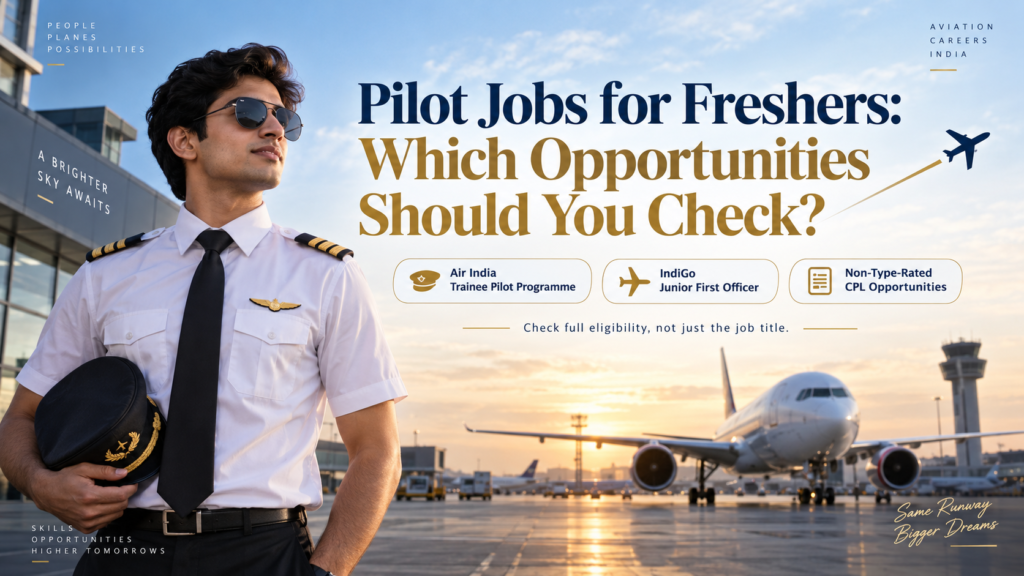
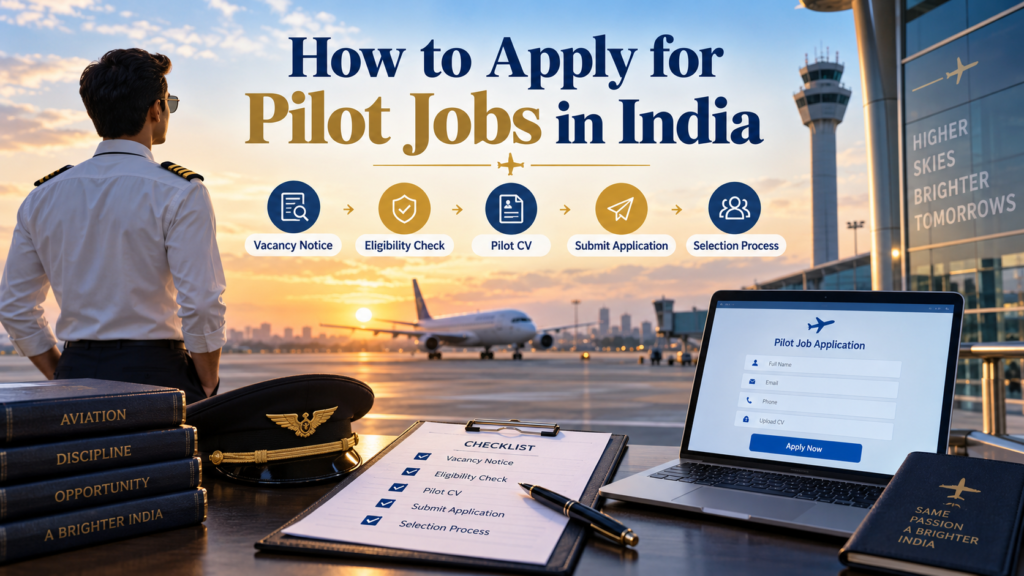
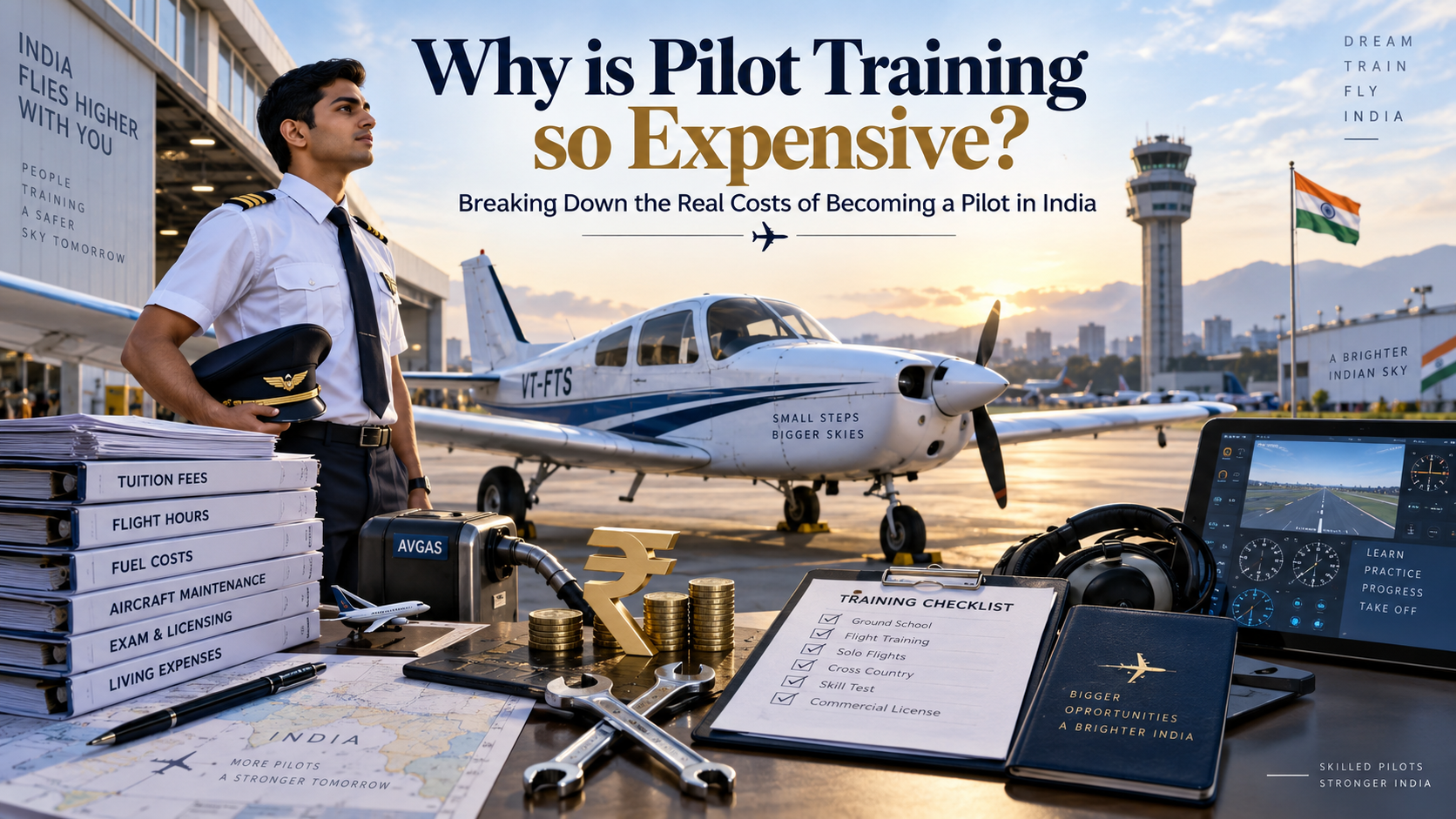
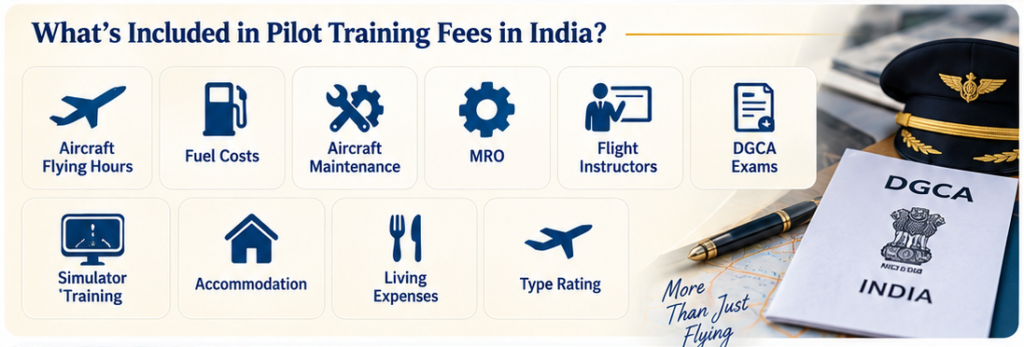
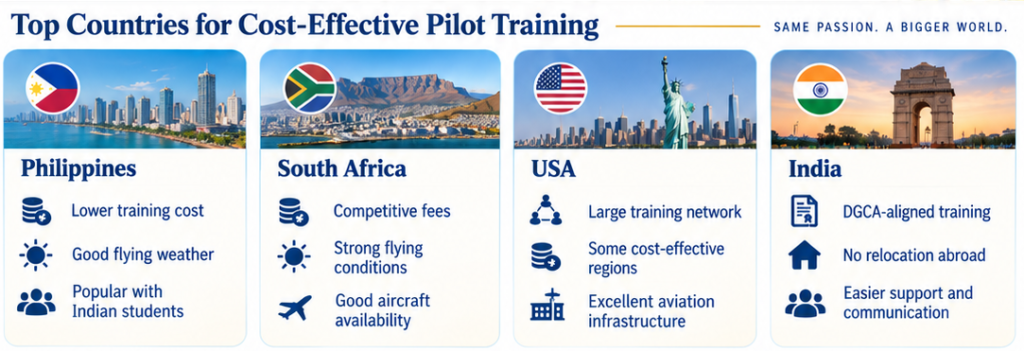
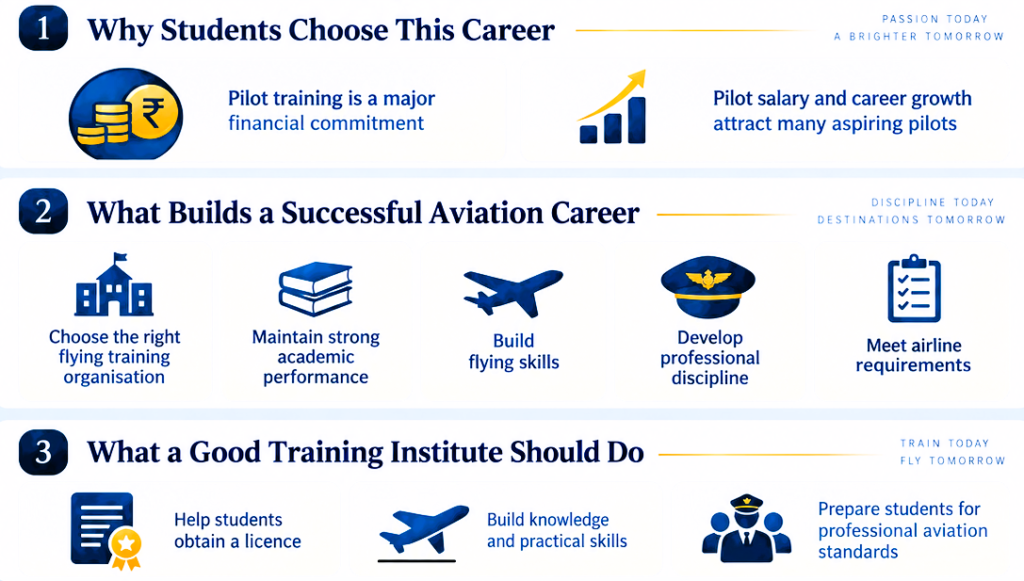
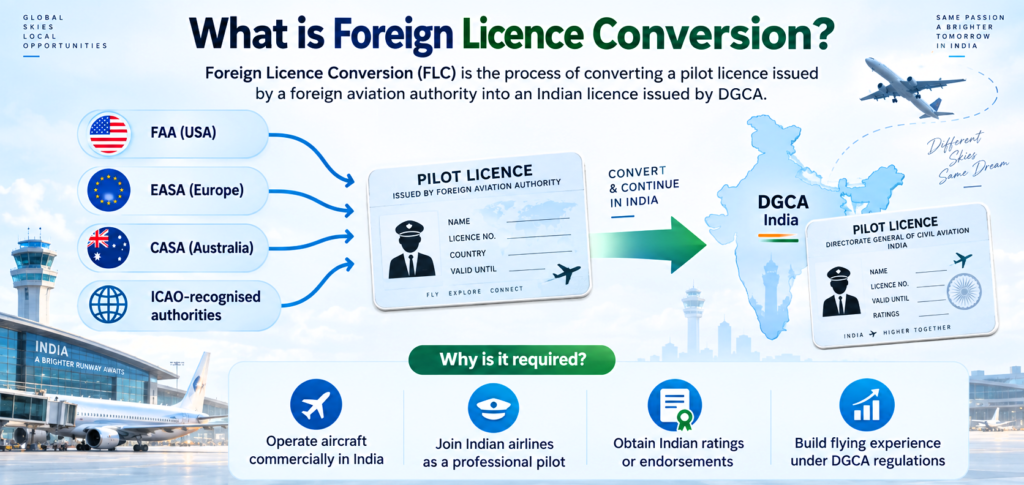
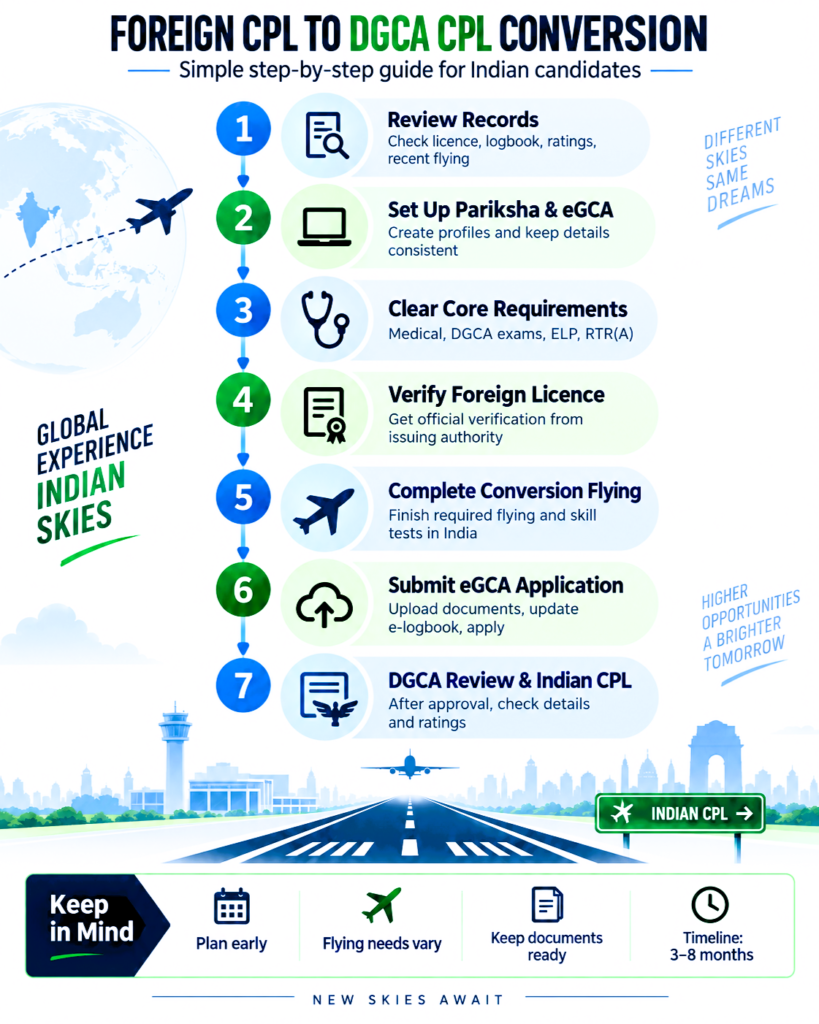
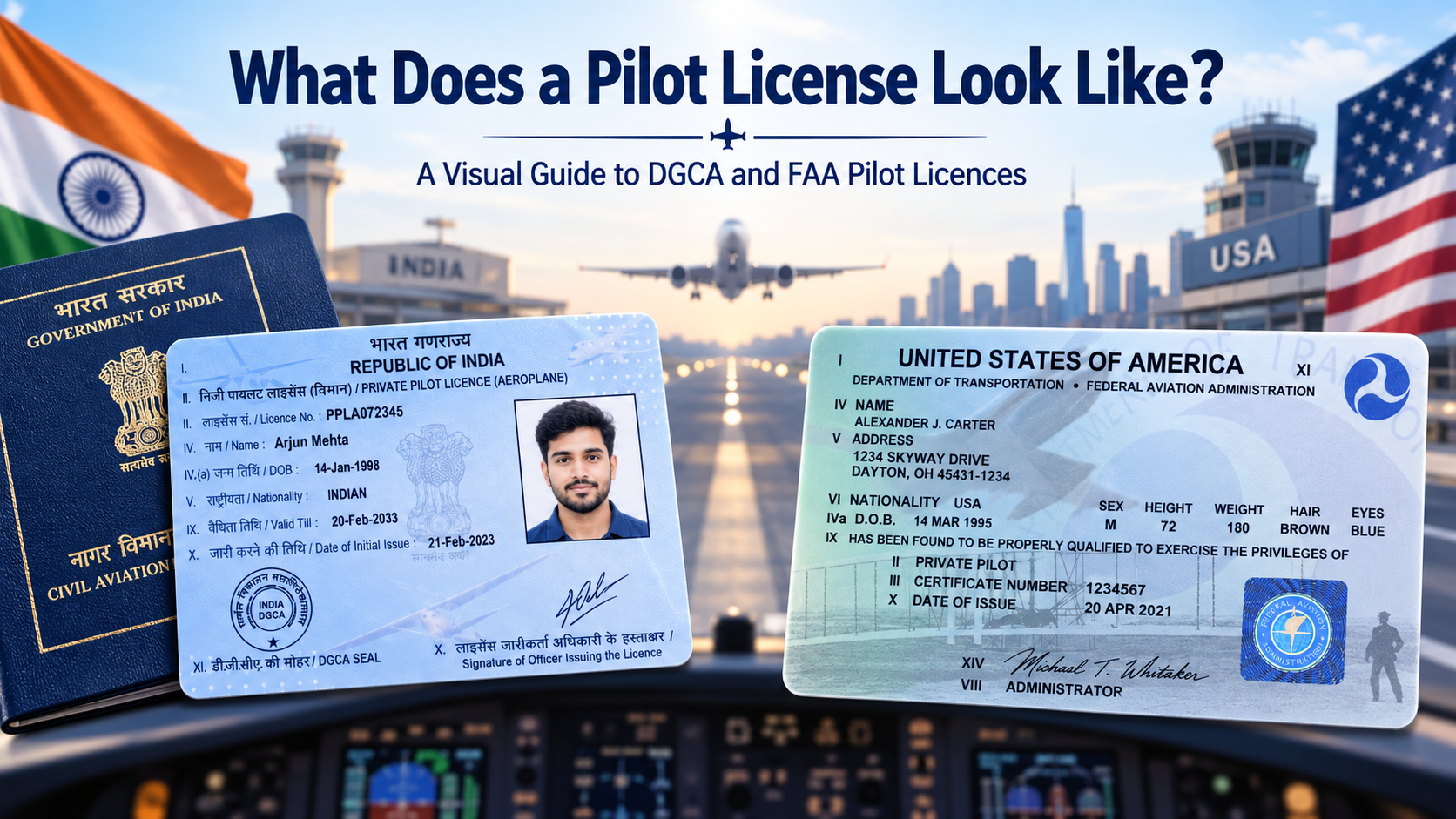
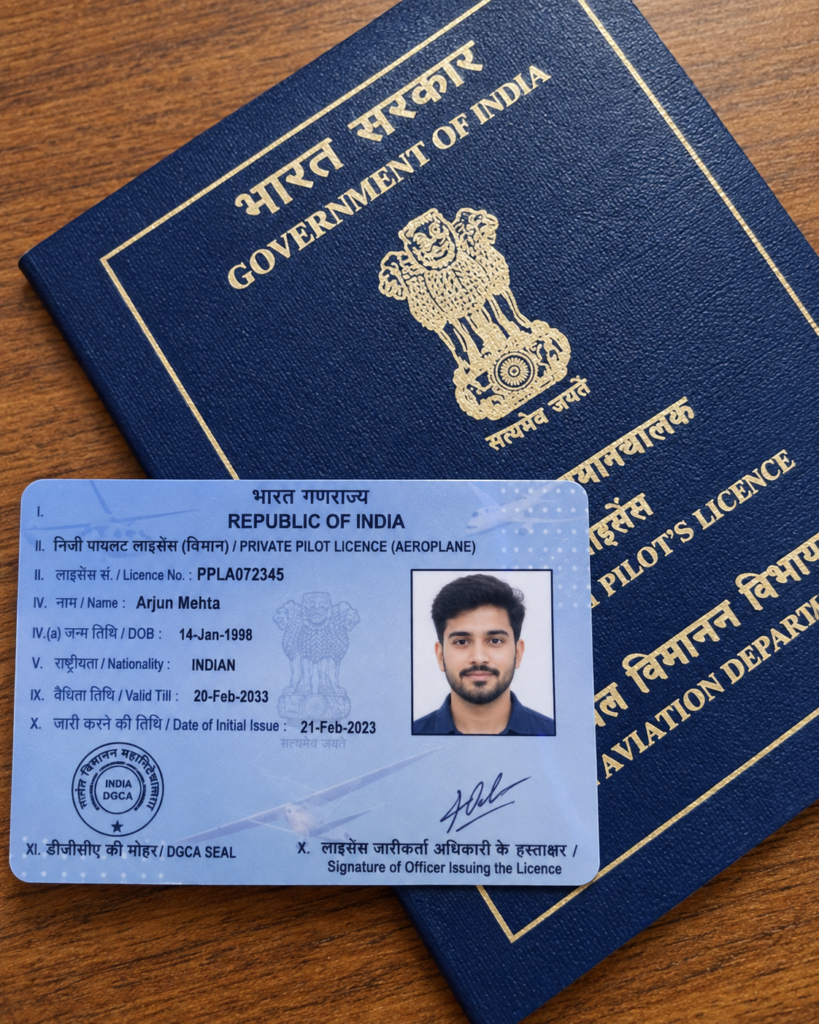
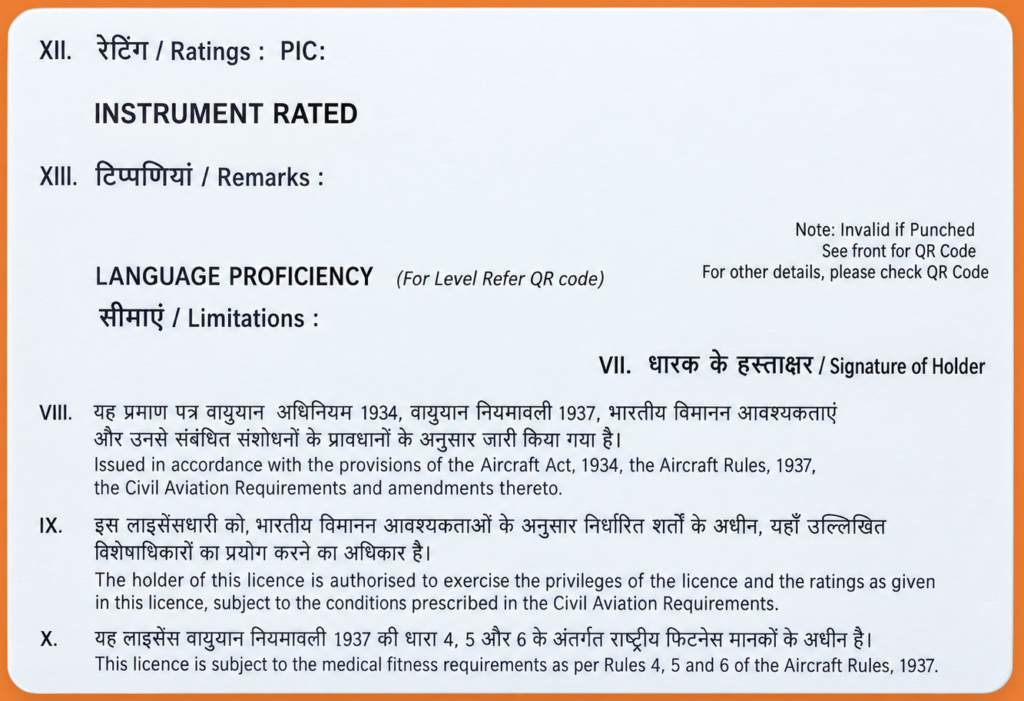
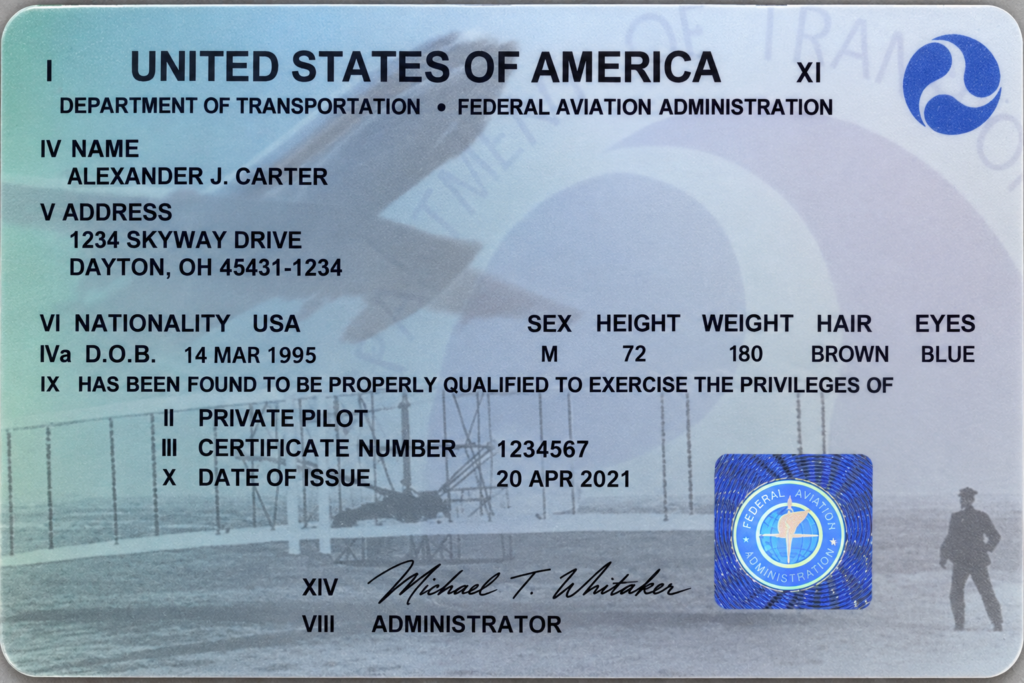
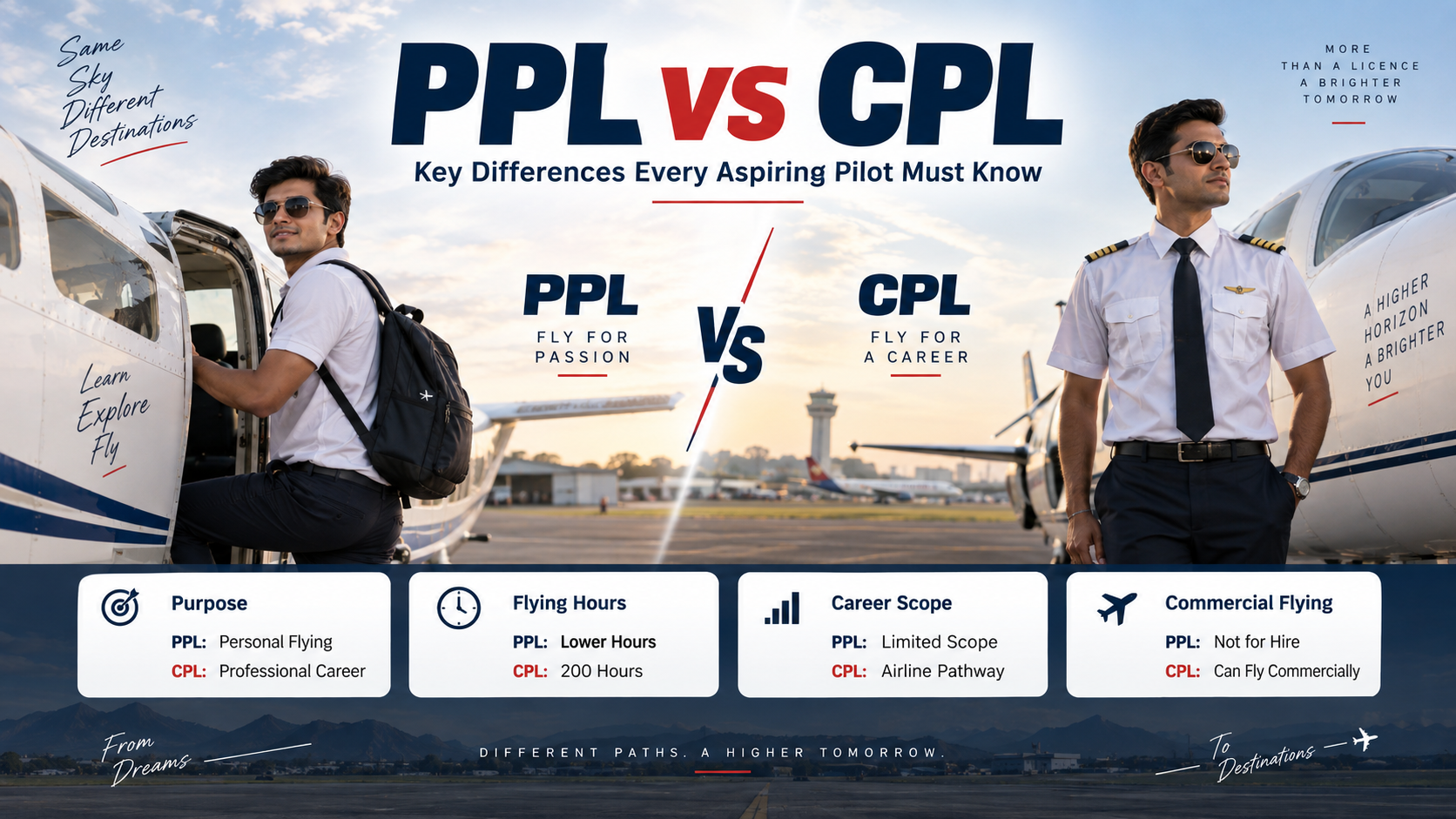
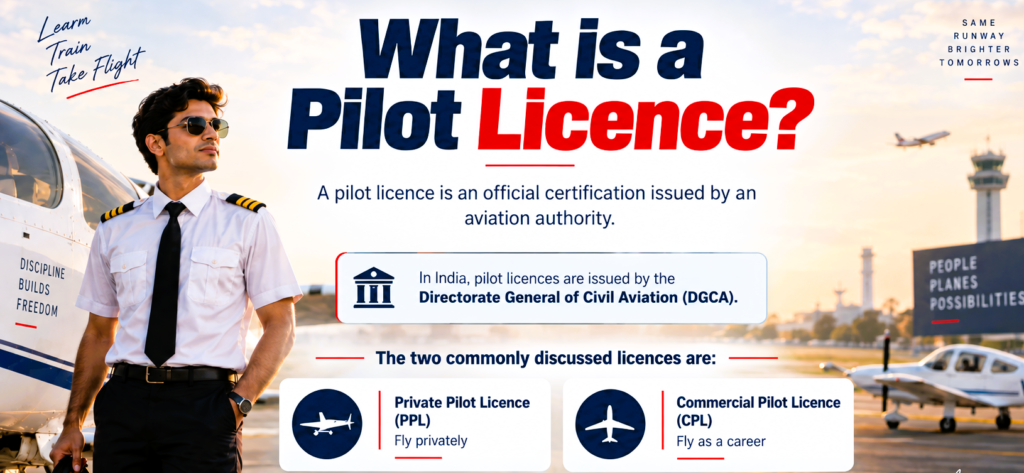
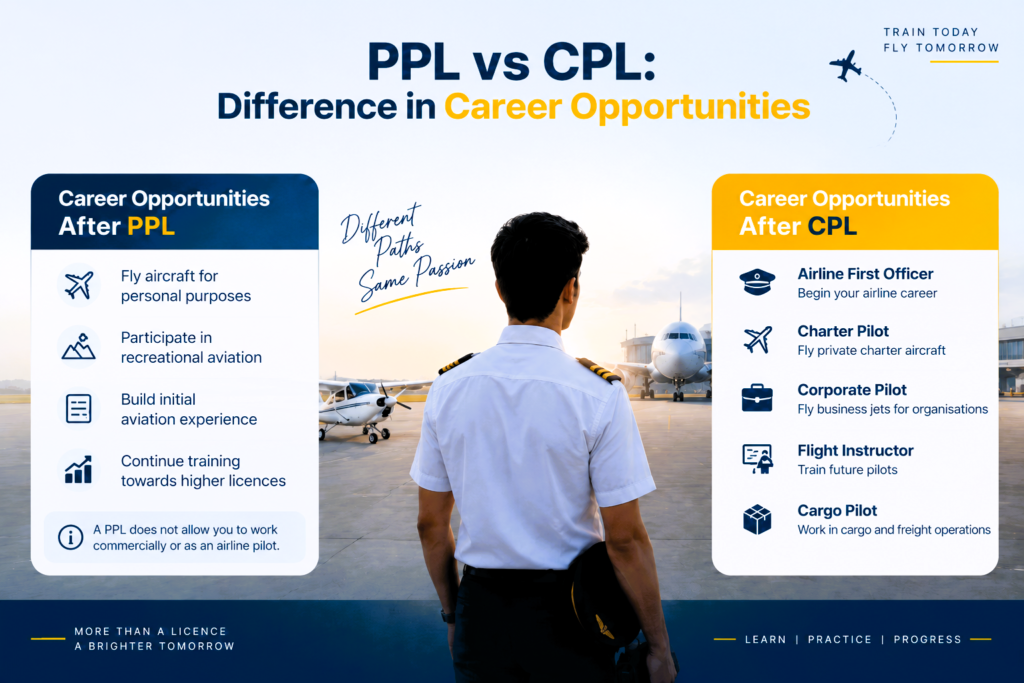
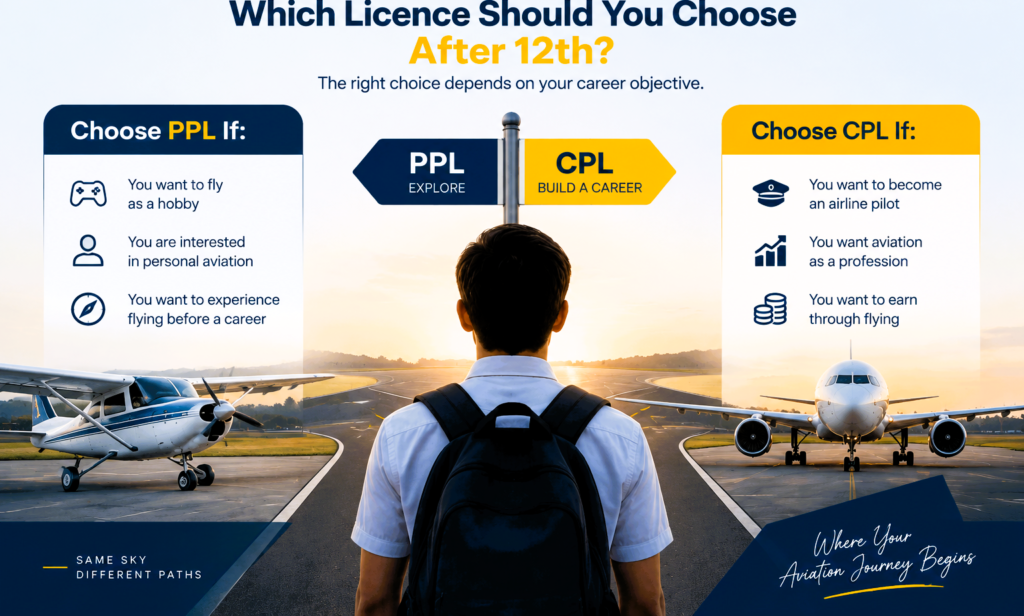
![First Officer vs Captain: Salary, Roles & Career Growth [2027]](https://blog.vfti.co.in/wp-content/uploads/2026/09/FO1.png)
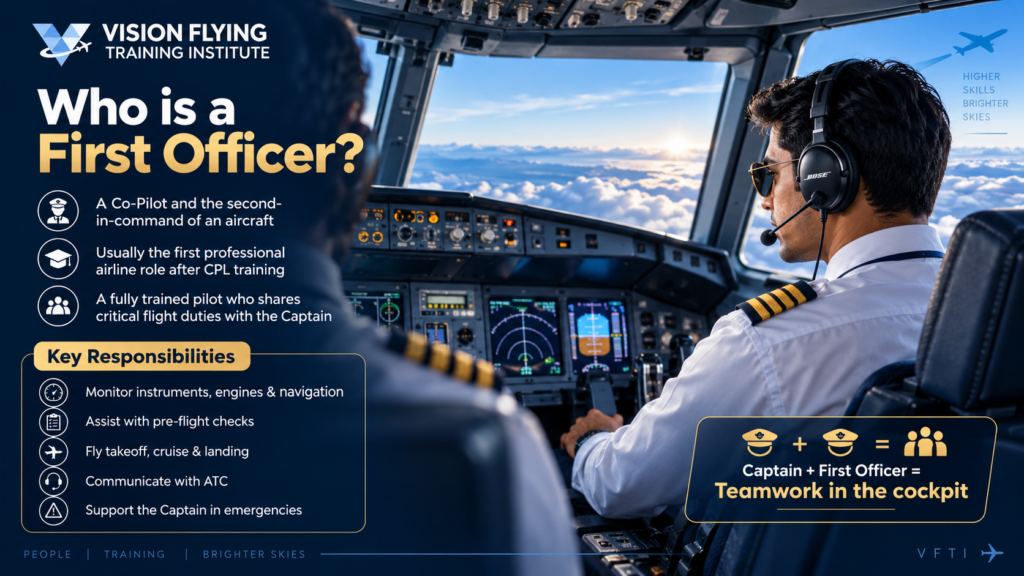
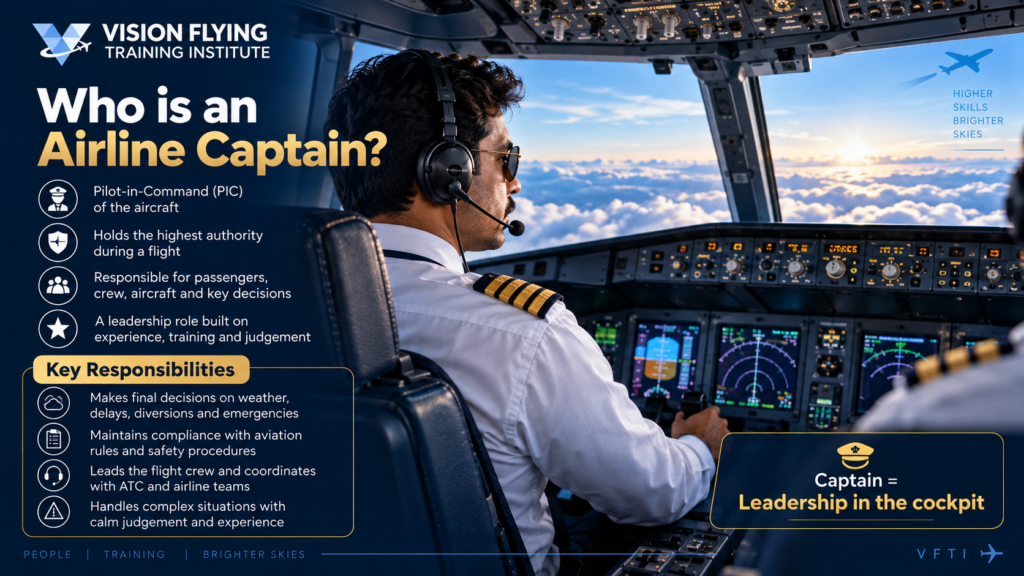
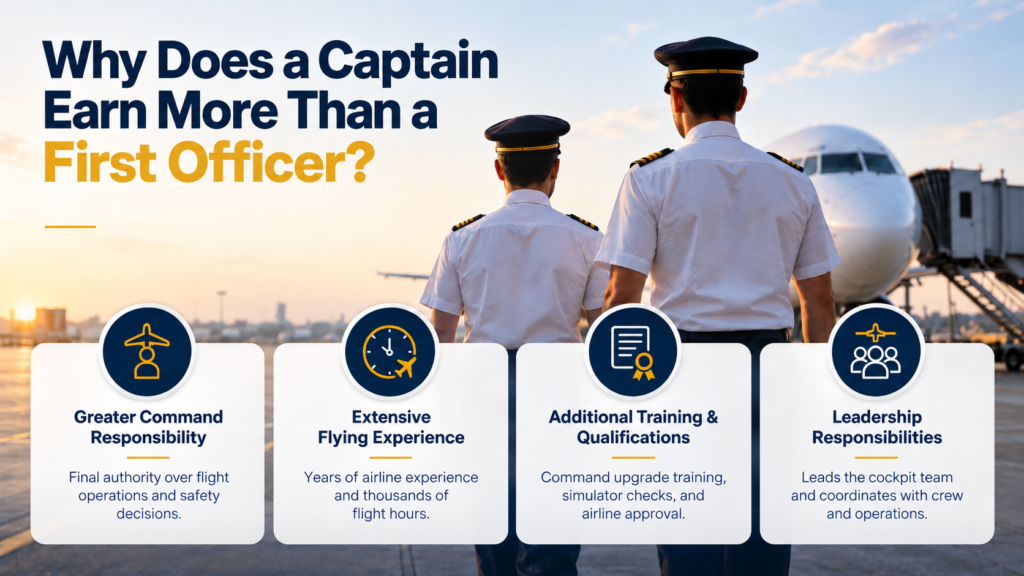
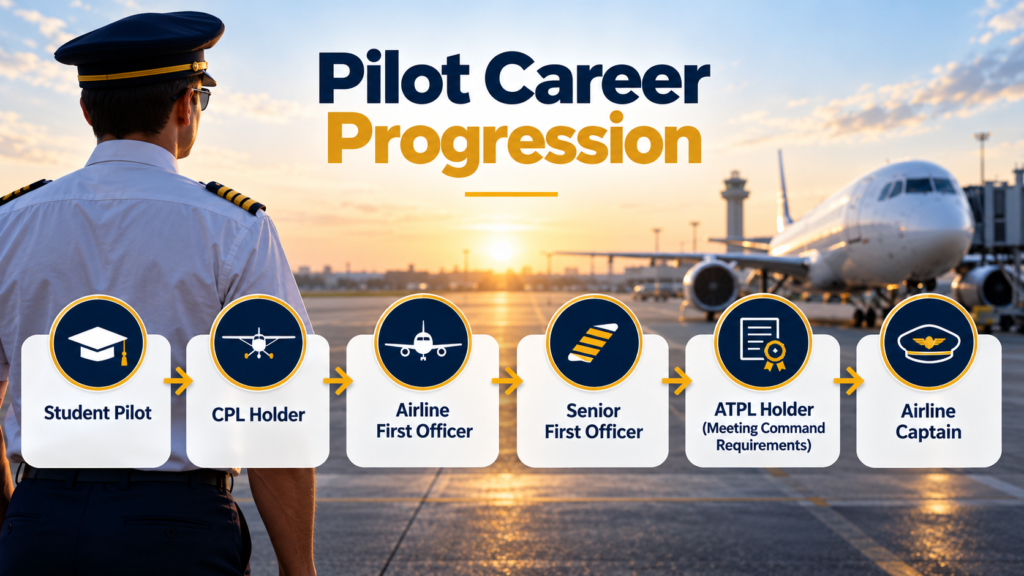
![How to Apply for Pilot Training in India: Guide [2027]](https://blog.vfti.co.in/wp-content/uploads/2026/09/t1.png)
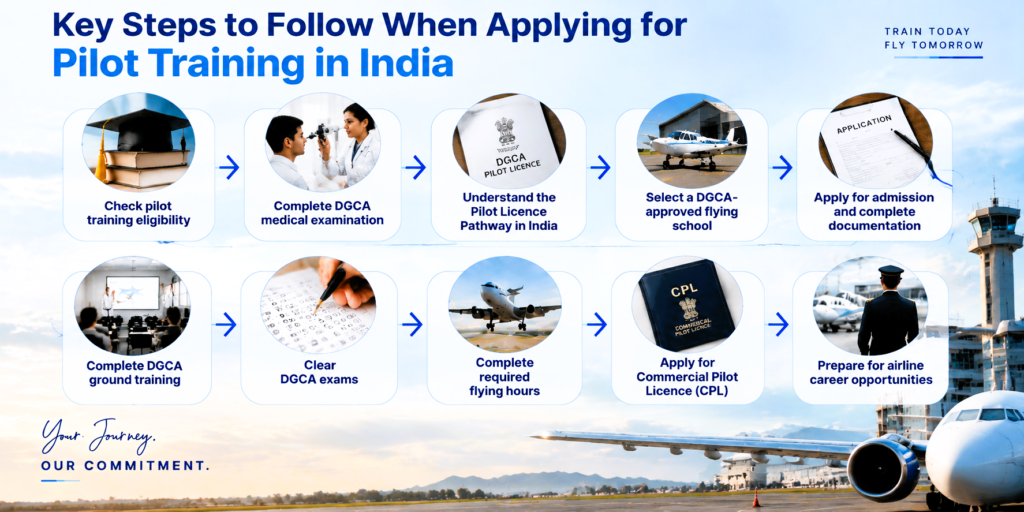
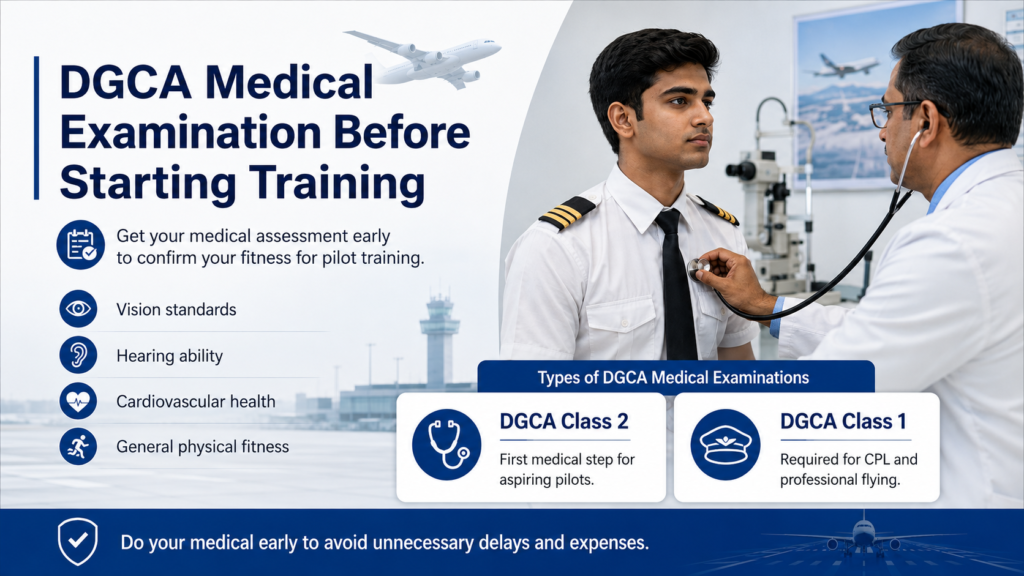
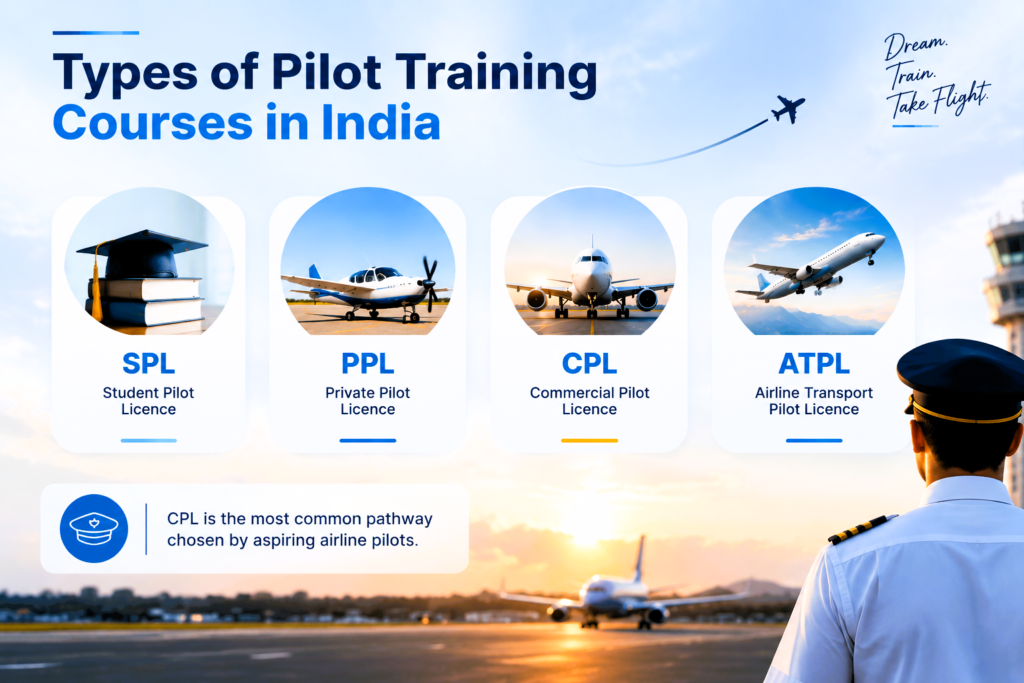
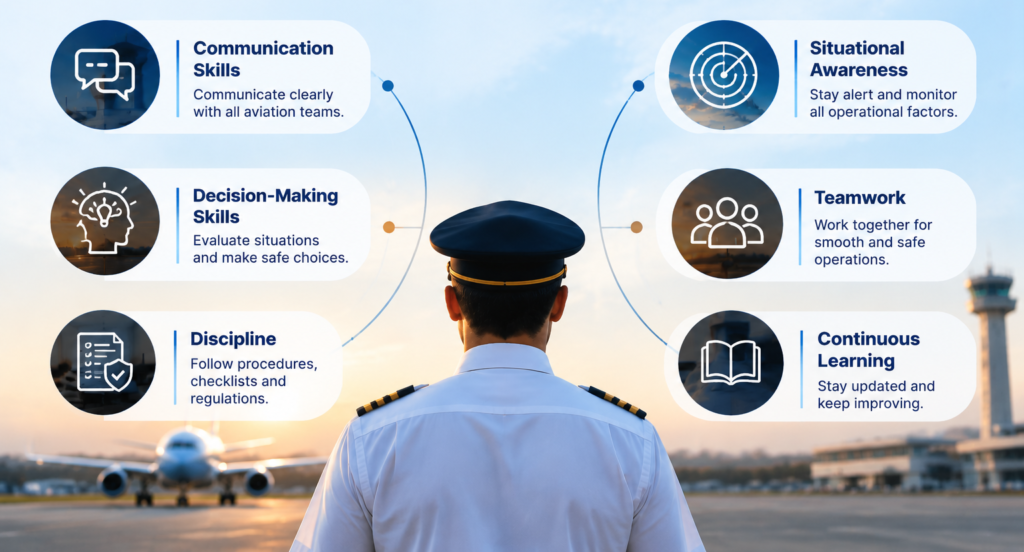
![Commercial Pilot Training Programs: Complete Guide [2026]](https://blog.vfti.co.in/wp-content/uploads/2026/08/1-3.png)